NOV 26 | Kitchen-Table Theology: How Ordinary Meals Shape Extraordinary Faith
Kitchen-Table Theology: How Ordinary Meals Shape Extraordinary Faith
Discovering the Sacred in Shared Bread | Luke 24:30-32 Bible Study
Two men spent an entire afternoon walking with Jesus. They talked with him. They listened to him explain Scripture passage after passage. And through all of it—seven miles of conversation, hours of teaching—they had absolutely no idea who he was.
Their eyes stayed blind to the resurrected Savior walking right beside them.
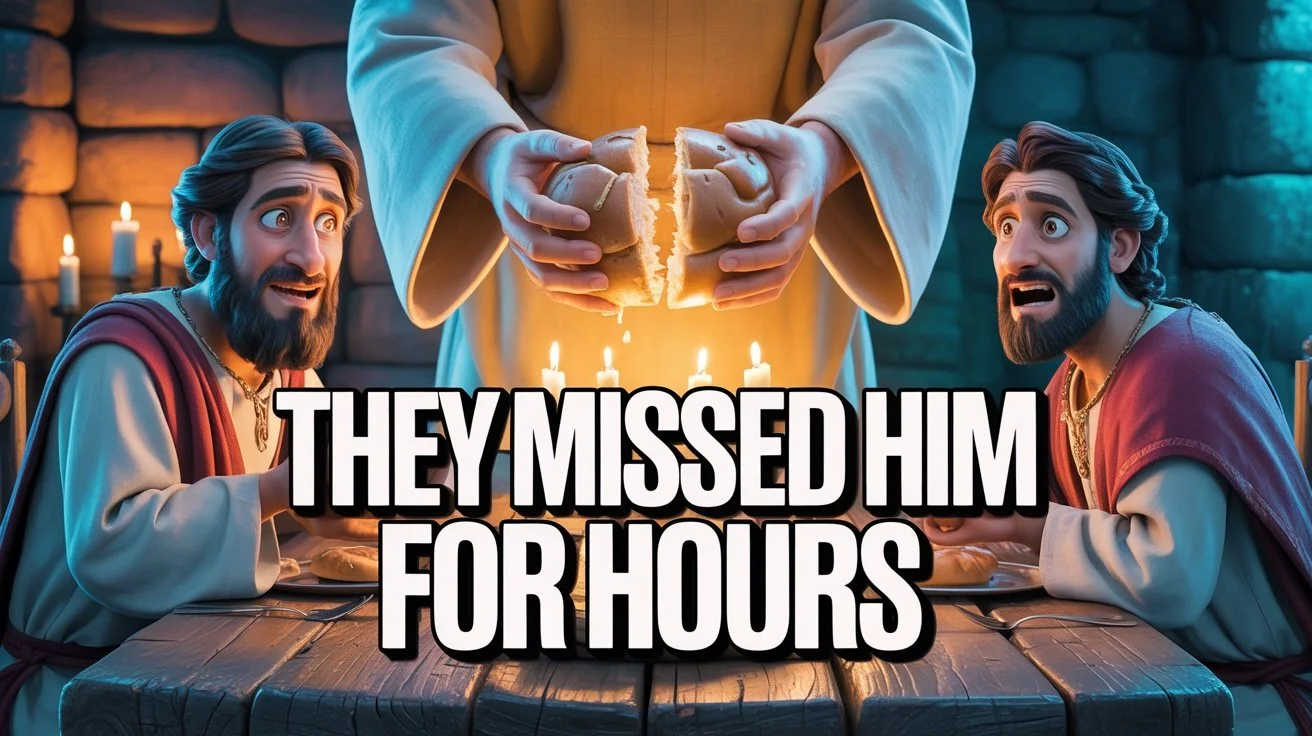
You know what finally made them recognize God in the flesh? It wasn't a miracle. It wasn't a heavenly vision or a dramatic revelation. Jesus simply ripped apart a dinner roll.
If you've just experienced a holiday meal—whether it was filled with laughter, awkward silences, or both—this story from Luke 24 might change how you see every meal you'll ever share again. Because what happened at that table in Emmaus reveals something profound about how God works: He loves showing up in the ordinary moments we so easily overlook.
The Road to Emmaus: Setting the Scene
The story takes place on the same day as the resurrection. Two disciples—only one named Cleopas—are walking from Jerusalem to Emmaus, a village about seven miles away. They're dejected. Confused. The man they thought was the Messiah had been crucified just three days earlier, and now there are strange rumors about an empty tomb.
A stranger joins them on the road. He asks what they're discussing, and they pour out their heartbreak. Then this stranger does something remarkable: beginning with Moses and all the Prophets, he explains how everything in Scripture pointed to these very events.
For hours, Jesus walks alongside these disciples, teaching them. And they don't recognize him.
This detail matters. Luke, the physician who wrote this Gospel, was meticulous about facts. He's telling us something important: sometimes we can be in the very presence of Jesus, hearing truth, feeling something stir in our hearts—and still miss who's right in front of us.
The Moment Everything Changed: Luke 24:30-32
As evening approaches, the disciples urge the stranger to stay with them. They sit down to eat. And then Luke records this:
"When he was at the table with them, he took bread, gave thanks, broke it and began to give it to them. Then their eyes were opened and they recognized him, and he disappeared from their sight. They asked each other, 'Were not our hearts burning within us while he talked with us on the road and opened the Scriptures to us?'" — Luke 24:30-32
Look at what opened their eyes. It wasn't supernatural fireworks. It wasn't Jesus revealing his nail-scarred hands or glowing with divine light. It was the way he broke bread.
Understanding First-Century Bread Breaking
To grasp what happened here, you need to understand what breaking bread meant in first-century Jewish culture. This wasn't just eating. It was intimate. Sacred. Familiar.
The head of the household would take the loaf and say a blessing—the berakah—a prayer of thanksgiving to God. Then he would physically tear the bread apart and pass pieces to everyone at the table. This ritual happened at virtually every meal.
Here's what makes this significant: you'd recognize your father's hands doing this. Your rabbi's particular way of holding the bread. The specific words he'd speak. The way he'd look around the table before breaking the loaf.
These disciples had shared dozens of meals with Jesus. Perhaps hundreds. They knew his hands. They knew his voice when he prayed. They knew his gestures, his rhythm, his presence at a table.
And in that ordinary, everyday moment—the same gesture they'd witnessed at countless dinners—suddenly they saw him.
Hearts Burning: The Recognition We Almost Miss
What strikes me most about this passage is verse 32. After Jesus disappears, these two disciples turn to each other with a question: "Weren't our hearts burning within us while he talked with us on the road?"
They felt something. For hours, they felt something. A warmth. A stirring. Something was happening in their chests while this stranger explained Scripture. But they didn't recognize it until the bread was broken.
This is perhaps the most convicting part of the story for us today. How often do we feel that burning—that inexplicable warmth in a conversation, that strange sense of significance in an ordinary moment—and dismiss it? How often does something sacred happen right in front of us, and we don't recognize it until later?
Sometimes you don't know what's sacred until after it's over.
The Sacred Hidden in Holiday Chaos
Think about your recent holiday gatherings. Maybe Thanksgiving just passed, or perhaps you're looking ahead to Christmas dinners and New Year's celebrations. In the midst of all that chaos—the cooking, the cleanup, the family dynamics, the small talk—did you notice anything sacred?
The holiest moment at your table might not have been the prayer before the meal. It might have been your dad's terrible joke that made everyone groan. Your grandmother's hands—the same hands you've watched make that same dish for thirty years. The moment someone actually asked how you're really doing, and you felt something in your chest you couldn't quite name.
Your heart was burning. You just didn't recognize it yet.
We've got this backwards, I think. We keep waiting for God to show up in the extraordinary—the mountaintop experience, the worship conference, the perfectly orchestrated spiritual moment. Meanwhile, Jesus keeps showing up at kitchen tables.
A Pattern Throughout Scripture: Jesus and Meals
This pattern of Jesus revealing himself through shared meals runs throughout the entire New Testament. Once you see it, you can't unsee it.
He feeds 5,000 with bread and fish—and uses it as an opportunity to teach about the bread of life. He calls Matthew the tax collector, and the first thing they do together is share a meal with other outcasts. The night before his death, he gathers his disciples for one final supper, transforming ordinary bread and wine into lasting symbols of his sacrifice. After his resurrection, he cooks breakfast on the beach for Peter—the disciple who had denied him three times.
The early church in Acts 2 devoted themselves to "the breaking of bread." Not as an occasional ritual. As a lifestyle. Christianity, from day one, has been a kitchen-table faith.
What This Means for Your Next Meal
Every time you gather around a table with people—messy, complicated, sometimes-annoying people—you're participating in something ancient. Something holy.
The table is where strangers become friends. Where enemies sometimes become family. Where bread gets broken and passed from hand to hand, and somehow, in that passing, Jesus shows up. Not because the food is special. But because the presence is.
This is what biblical hospitality really looks like. It's not about impressive cooking or a perfect table setting. It's not about having your life together before you invite someone in. It's about making space—physical, emotional, relational space—for Jesus to show up.
And he seems to really like kitchen tables.
A Challenge for Your Week
Here's my challenge for you: The next meal you share with someone—tonight, tomorrow, whenever—pay attention. Not to your phone. Not to the game in the background. To the people.
Watch their hands. Listen to their stories. Notice their expressions. Be present.
Because if two disciples could walk for seven miles with Jesus and miss him entirely—only to finally see him when the bread was broken—maybe we're all just one shared meal away from recognizing something we've been missing.
Maybe that awkward family dinner is holier than you thought. Maybe that coffee with a struggling friend is more significant than you realized. Maybe God has been showing up at your table all along, and you just needed eyes to see.
Recognizing Jesus in the Ordinary
The road to Emmaus story doesn't end with the disciples sitting in stunned silence. After Jesus disappears, they immediately get up—that same hour, despite it being evening—and rush back to Jerusalem. They can't wait to tell others what they've experienced.
Encountering Jesus, even in the breaking of bread, compels us to share. It transforms us from confused wanderers into eager witnesses.
So the next time you sit down at a table—whether it's a holiday feast or a Tuesday night leftovers situation—remember: this is holy ground. The bread you break, the conversations you share, the presence you offer each other—it all matters more than you know.
Keep your eyes open. Your heart might already be burning.
What meal has shaped your faith? What table became holy ground for you? I'd love to hear your story.
#BibleStudy #ChristianLiving #LukeGospel #BiblicalHospitality #SpiritualGrowth #FaithJourney #RoadToEmmaus #ChristianFaith #ScriptureStudy #HolidayFaith #KitchenTableTheology #BreakingBread #JesusTeachings #NewTestament #ChristianCommunity

An Invitation to go Deeper….
If today’s message spoke to you, join the FaithLabz 30-Day Prayer Challenge and strengthen your connection with God’s unshakable love. You are never alone—let’s grow together!