
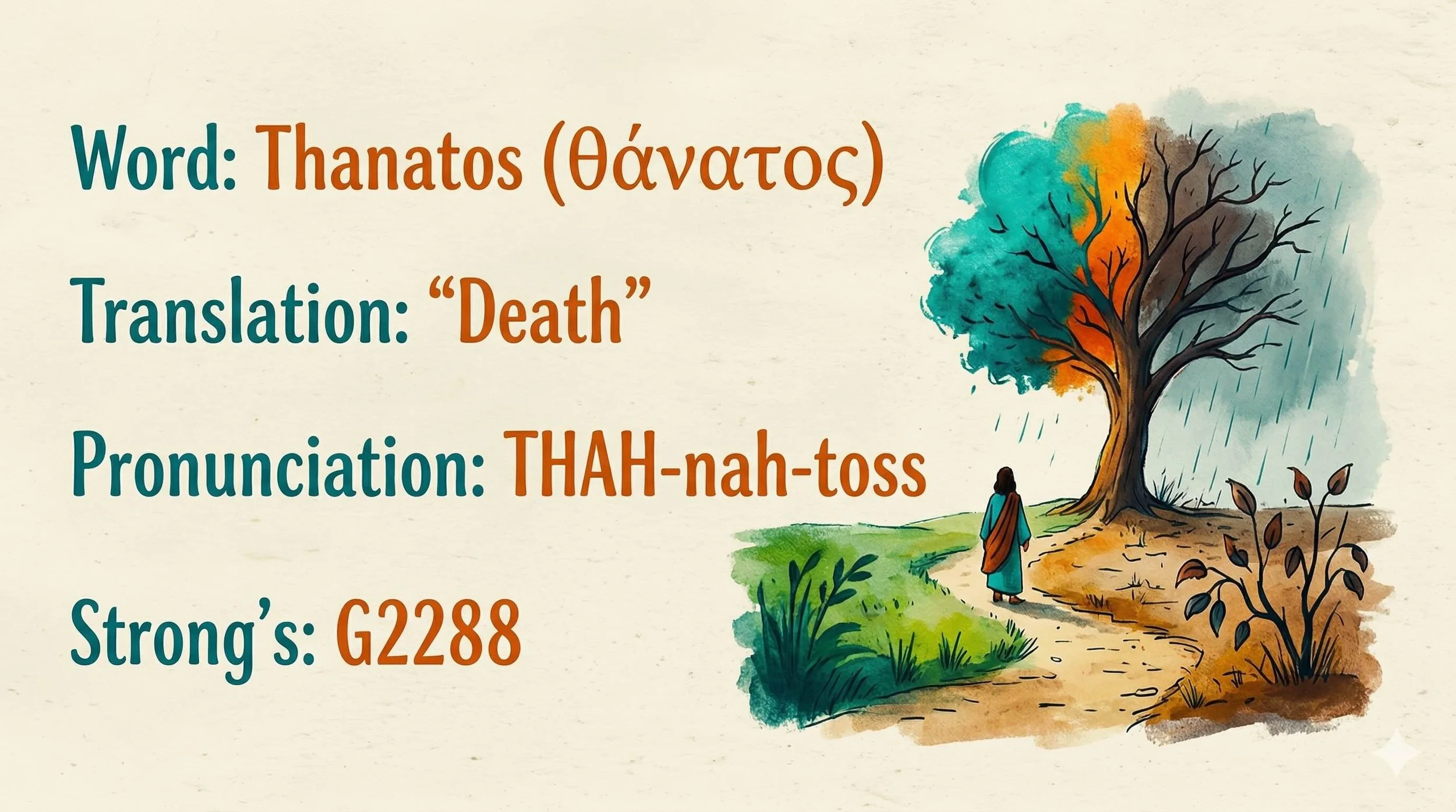
Why Paul Called Death the Last Enemy (1 Cor 15:26)
Paul didn't call sin the last enemy. He didn't call Satan the last enemy. He saved that title for death. And the order tells you everything about what Easter claims to have done.
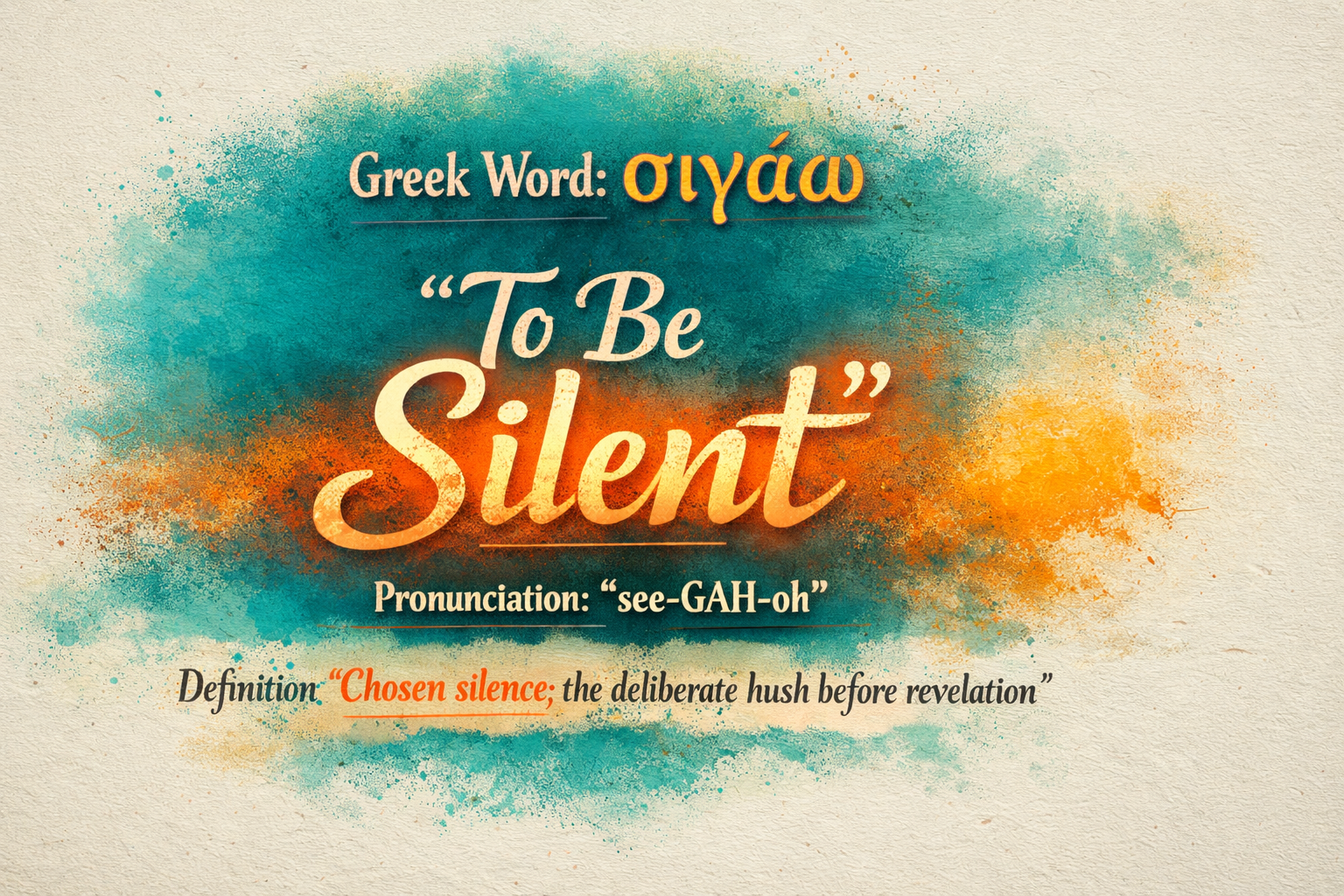
Anastasis: What "Resurrection" Actually Means in Greek
The Greek word for resurrection is anastasis. It doesn't mean floating away. It means a standing up again. And that simple, physical image changes everything about Easter.
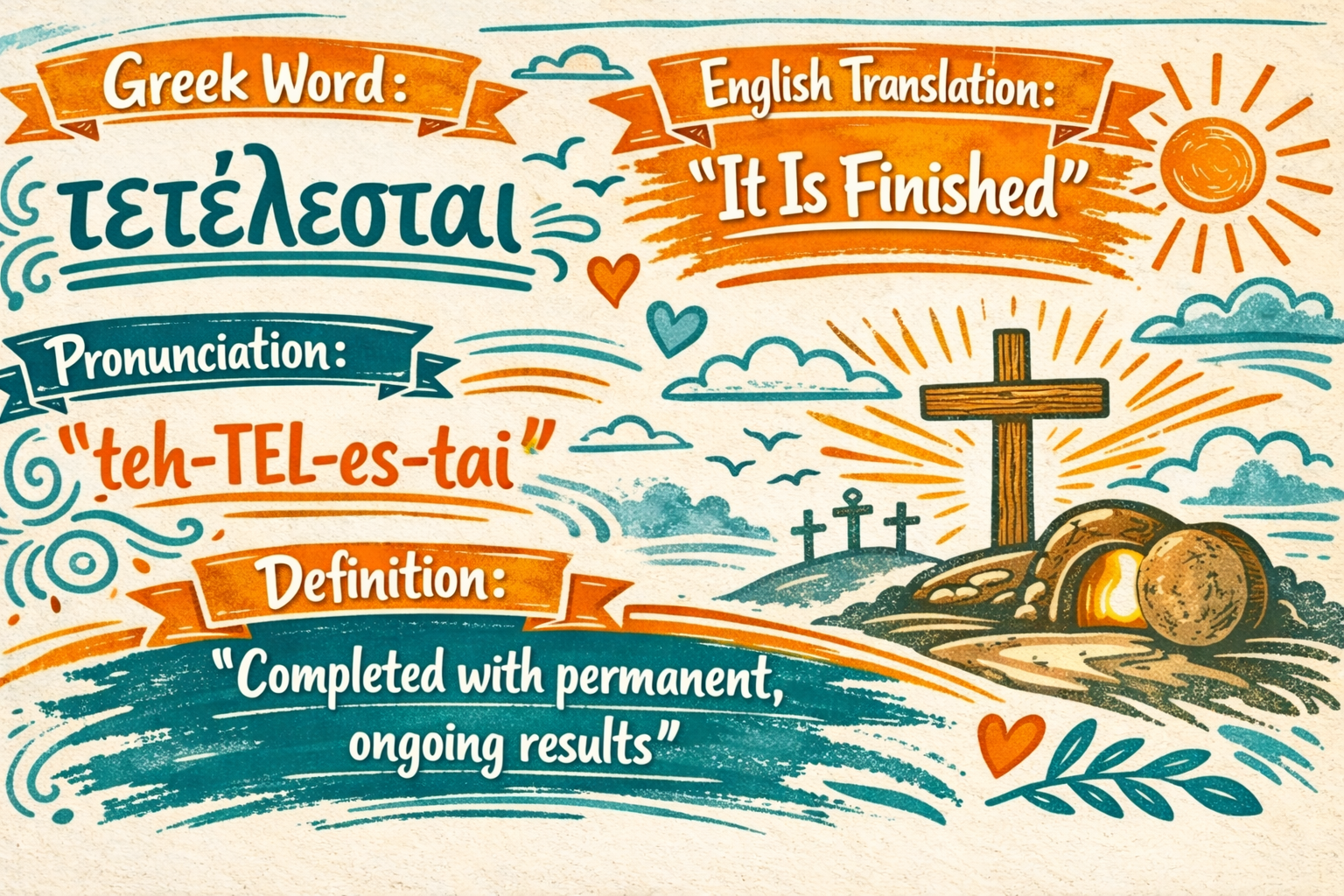
The Last Word: What Jesus Actually Meant by "It Is Finished"
For years, I heard "It is finished" and thought I was listening to a man giving up. I was reading it wrong. The Greek word tetelestai carries a verb tense that changes everything about Good Friday.
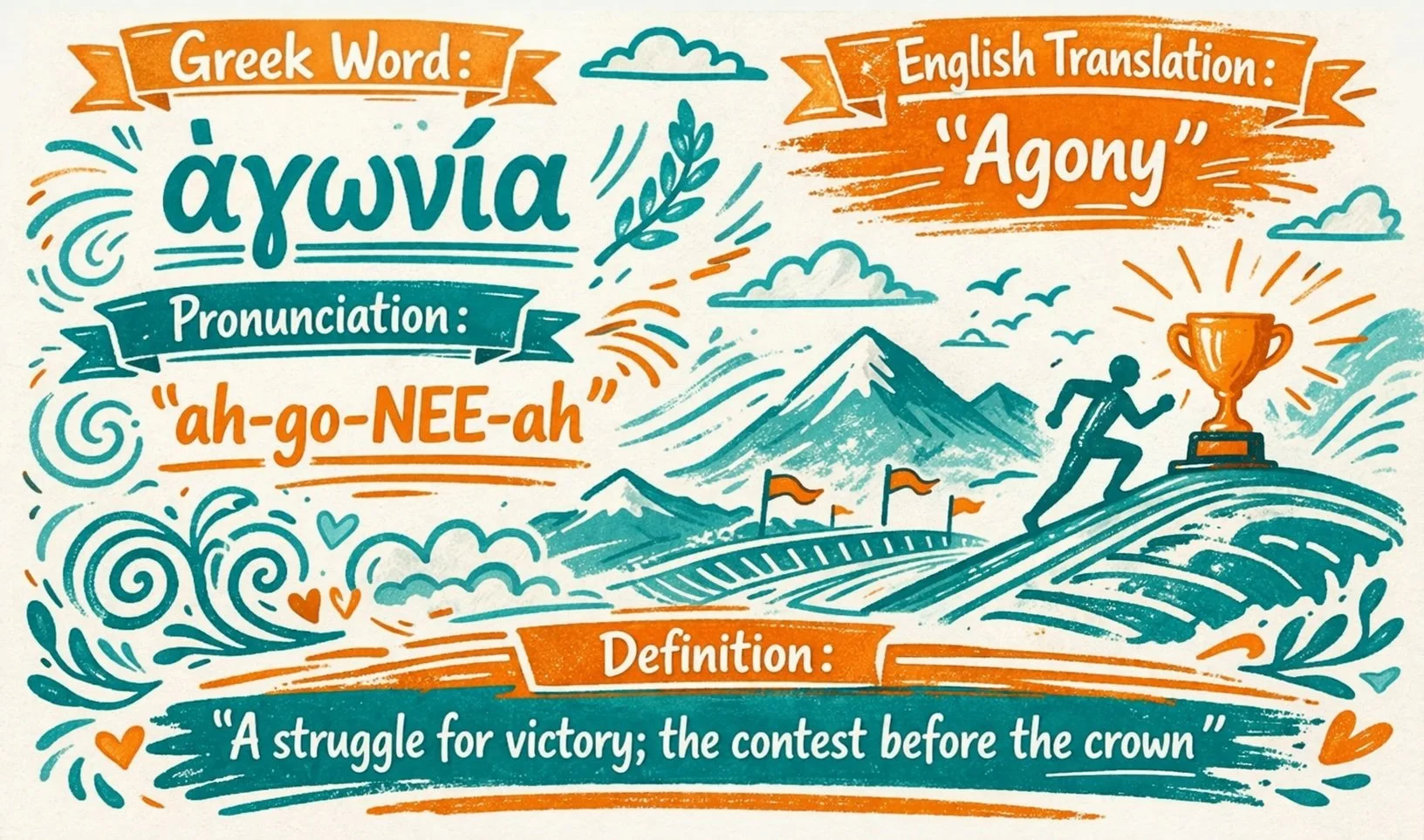
Agony in the Bible: The Greek Word for Gethsemane's Battle
Luke didn't say Jesus was sad in the garden. He used a word from the wrestling arena. What agōnia reveals about the night before the cross.
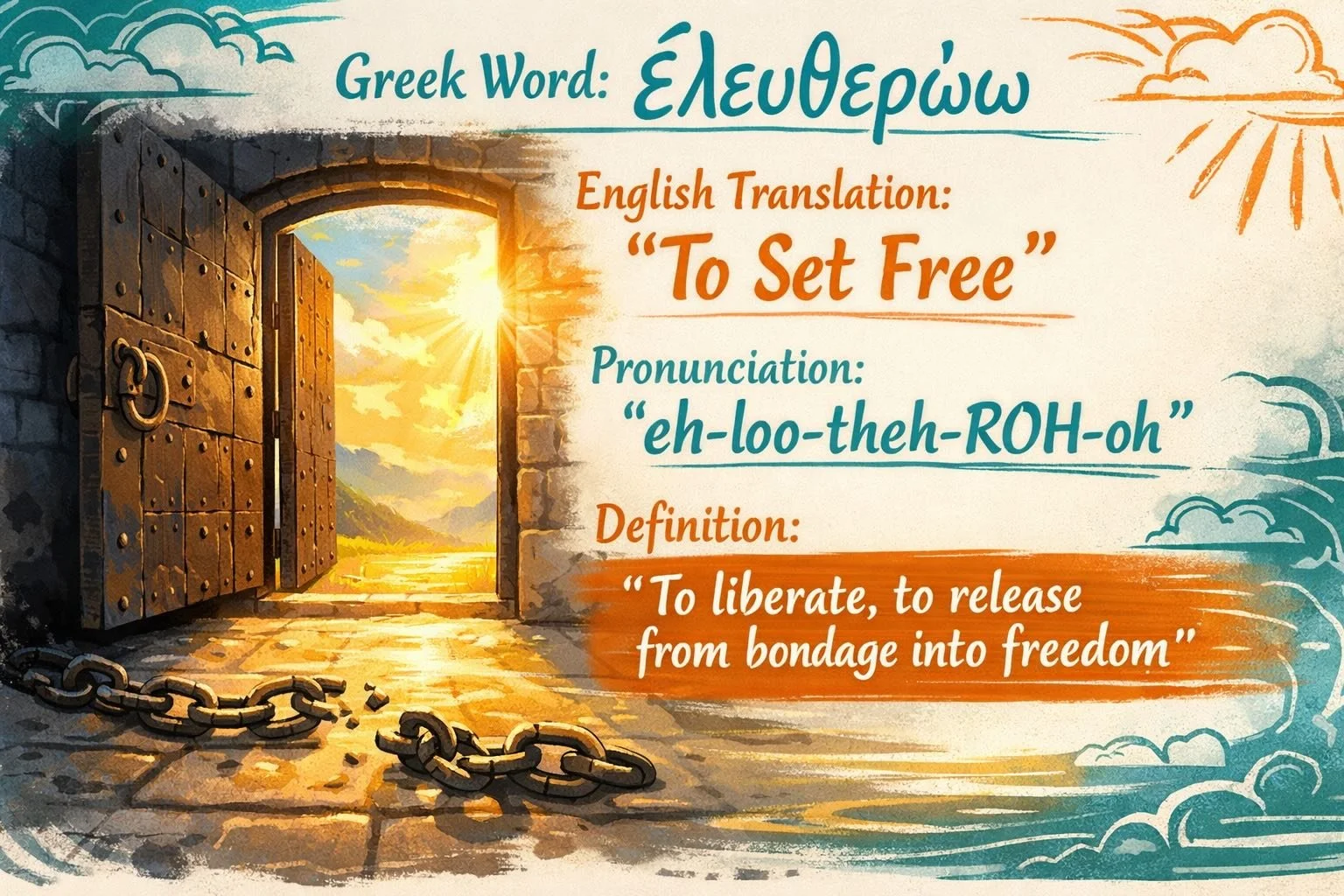
What "Free Indeed" Really Means in Greek (John 8:36)
Jesus said "free indeed" using a Greek word rooted in the verb "to be." Eleutheroō appears seven times in the NT. Every time, God is the one doing it. Not once is it self-applied.
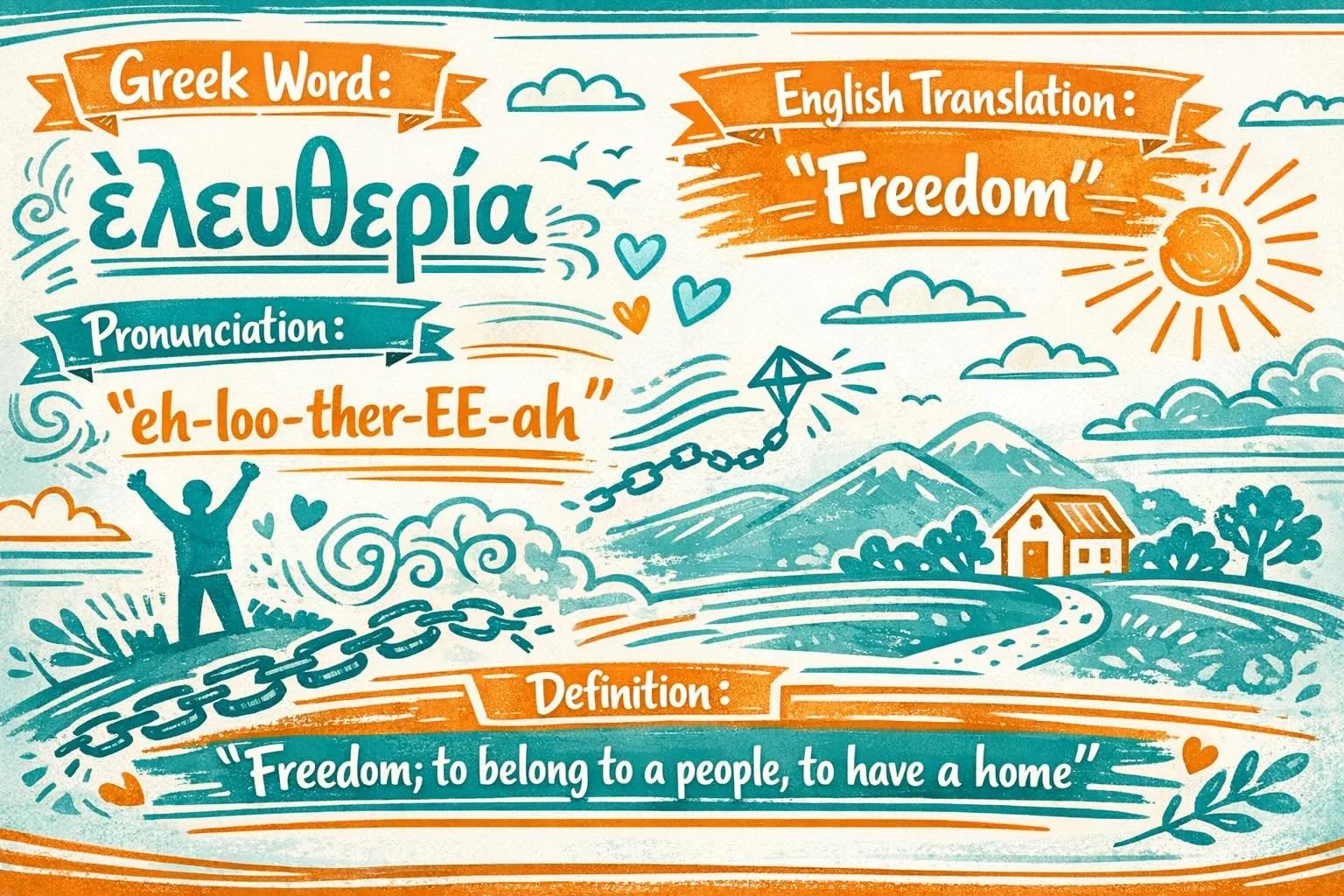
What Biblical Freedom Actually Means (It's Not What You Think)
Twenty-nine days of rescue words led me to one Greek term whose ancient root means the opposite of what I expected. Freedom isn't the absence of belonging. It's the whole point of it.
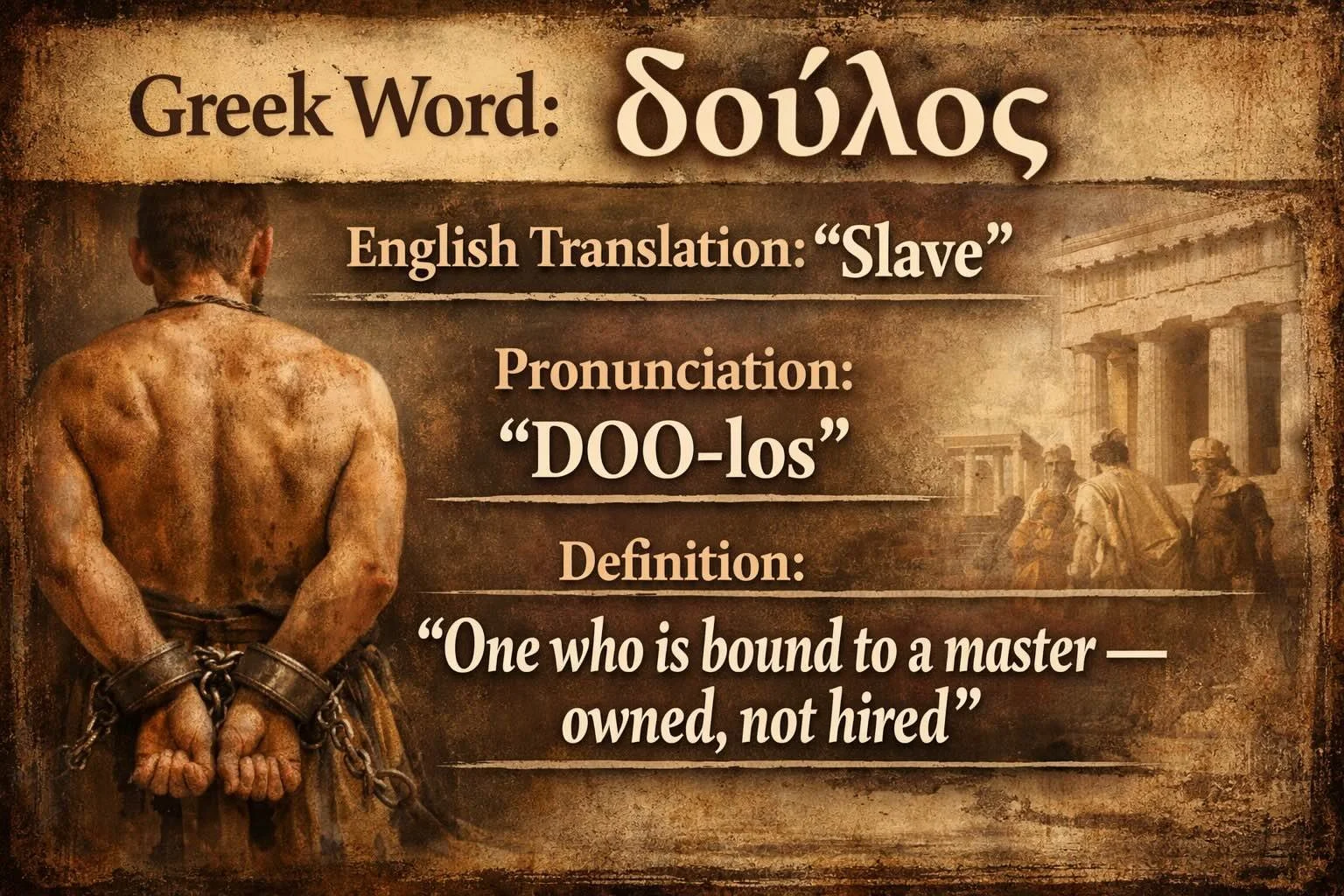
Why Paul Called Himself a Slave: The Greek Word Translations Soften
Paul opened Romans with one word about himself — and almost every English translation softened it. The Greek doulos means slave. He put it before apostle. Here's why.
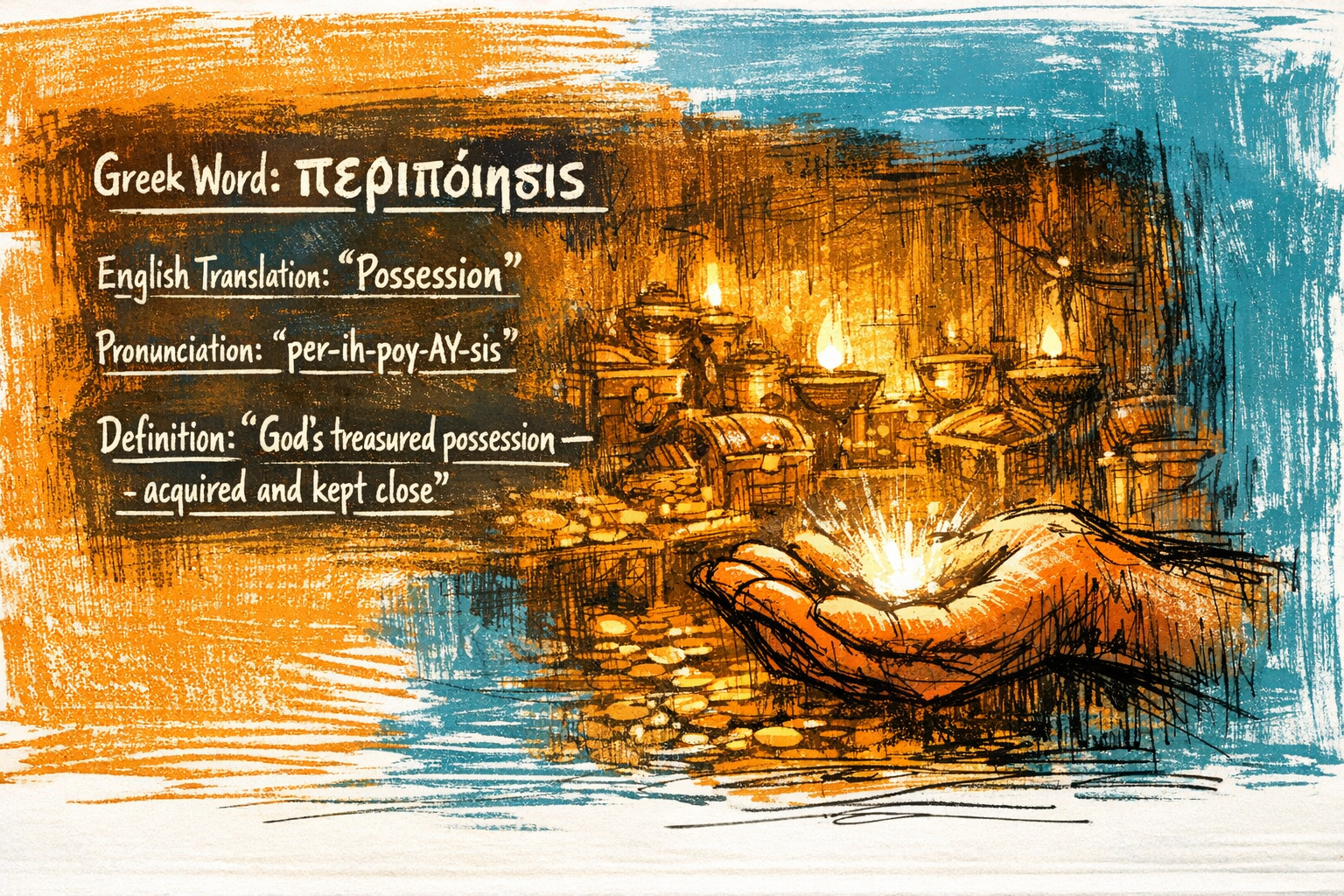
Peripoiēsis: The Greek Word for God's Treasured Possession
Rescue answers "Can I get out?" Ransom answers "What did it cost?" But the Greek word peripoiēsis answers the question behind both: "Am I wanted?"
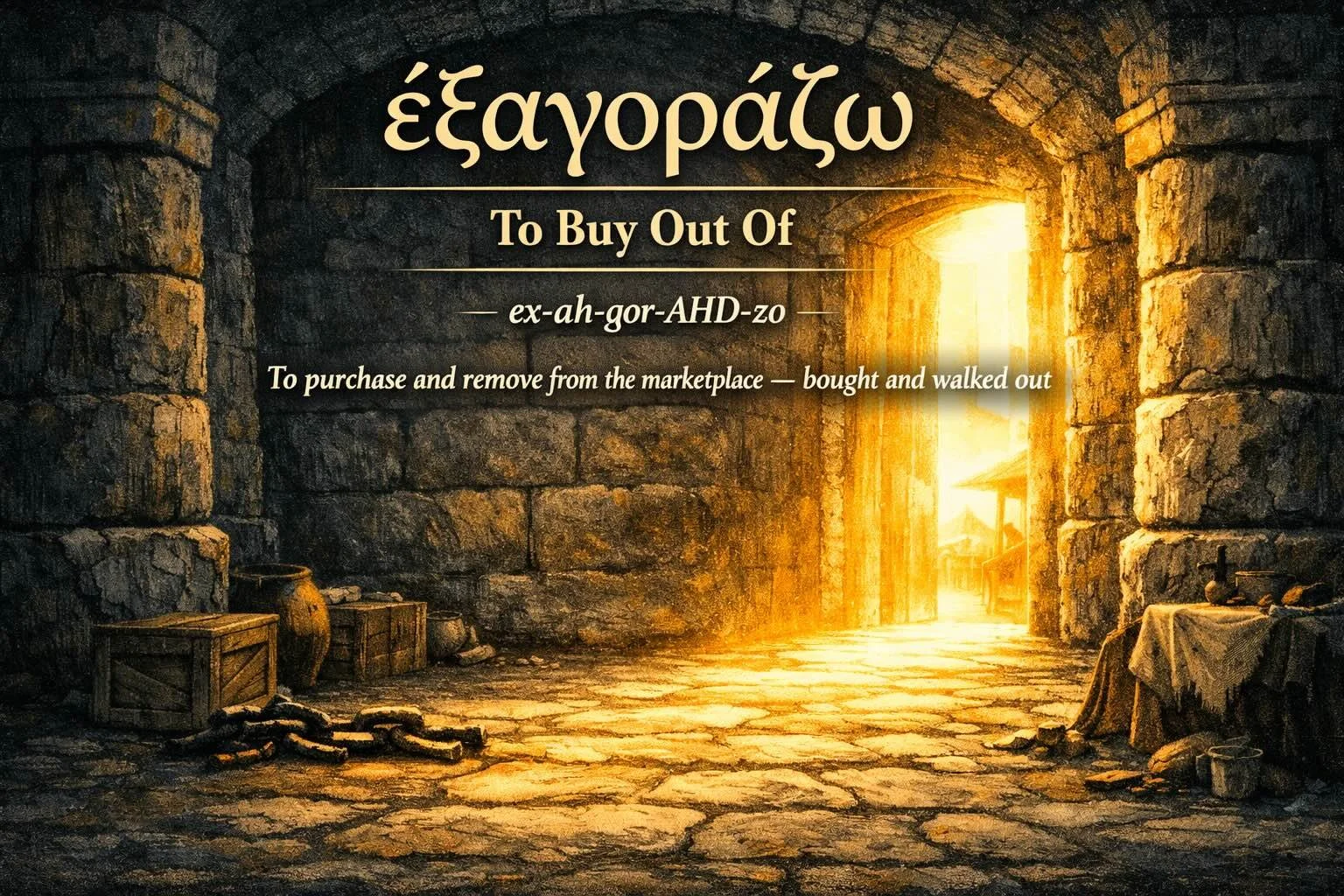
Exagorazō: The Greek Word That Means Bought and Removed
Paul didn't say we were purchased within the system. He said we were purchased out of it. Two letters — ex — that separate a transaction from a rescue.
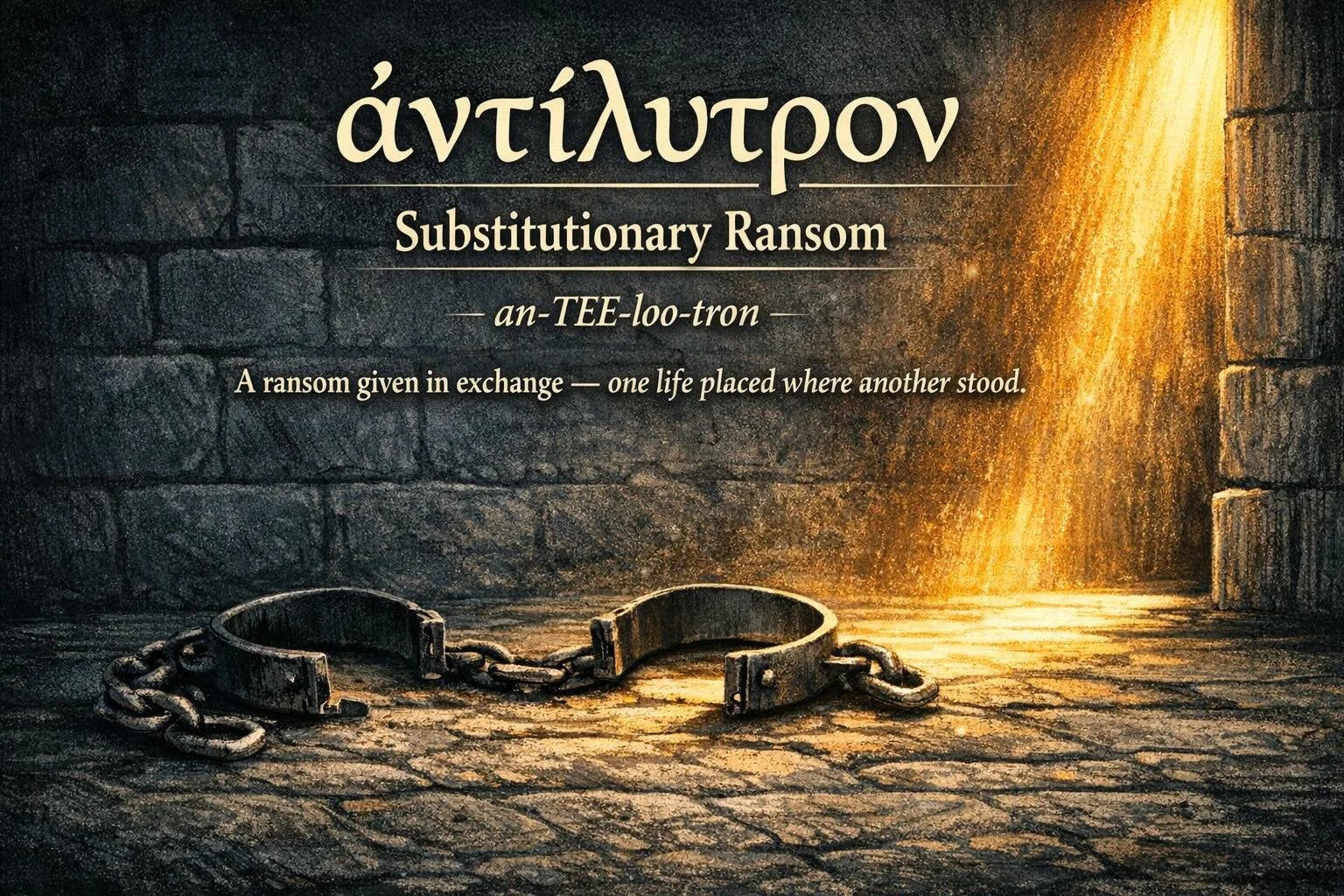
Antilutron: The Substitutionary Ransom Word Paul Invented
Paul didn't just repeat what Jesus said about ransom. He built a new word — antilutron — welding a prefix onto the cross that made the substitution impossible to miss. It appears once. Because once was enough.
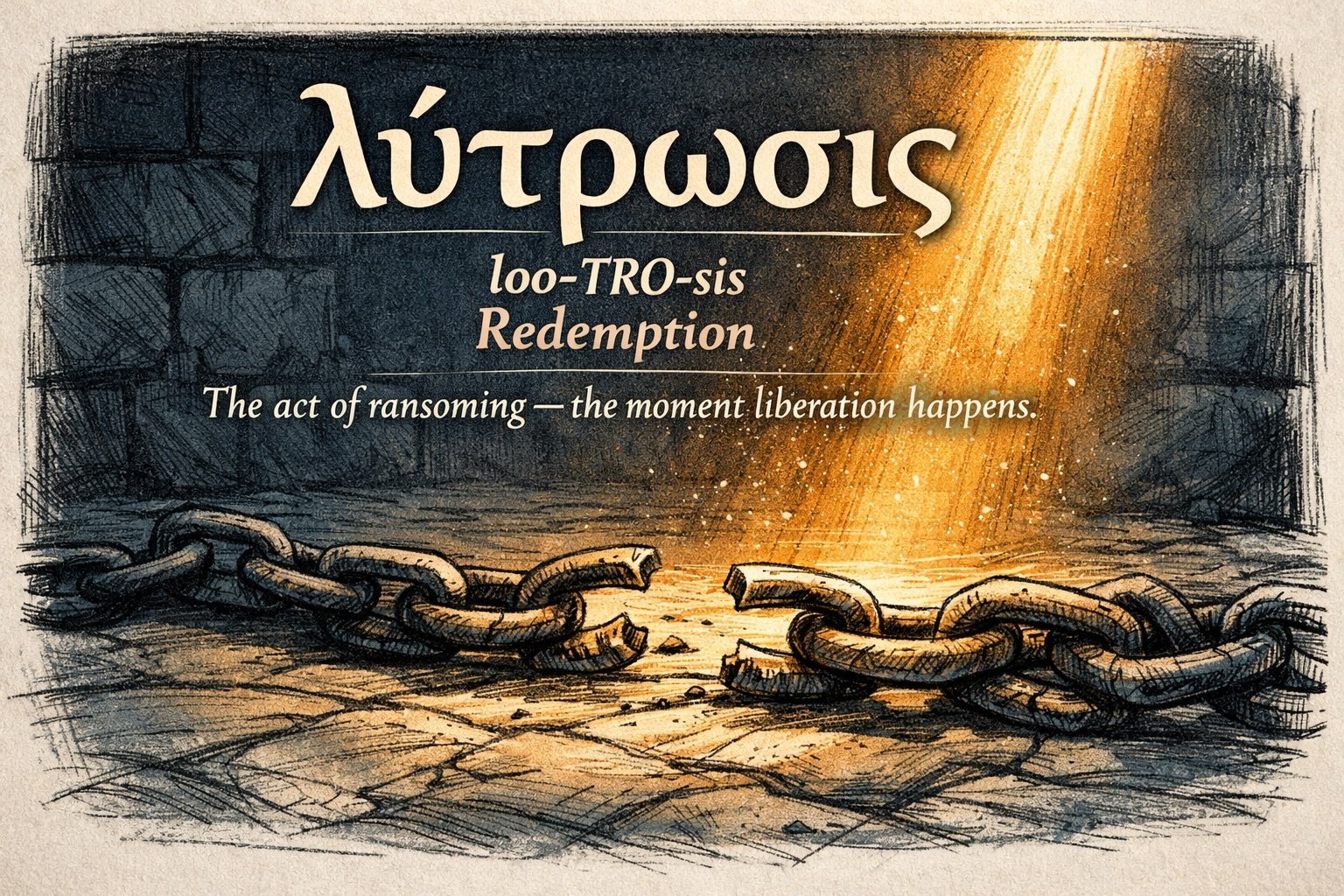
Lutrōsis: Zechariah's First Word After Nine Months of Silence
After nine months of enforced silence, the first concept Zechariah reached for was ransoming — lutrōsis, a Greek word that appears only three times in the New Testament. Here's why that matters.

What's in a Name? The Hebrew Word Shem and Biblical Identity
In Hebrew, your name isn't what people call you. Your name is what you are. Discover why shem changes how we read every calling passage in Scripture.
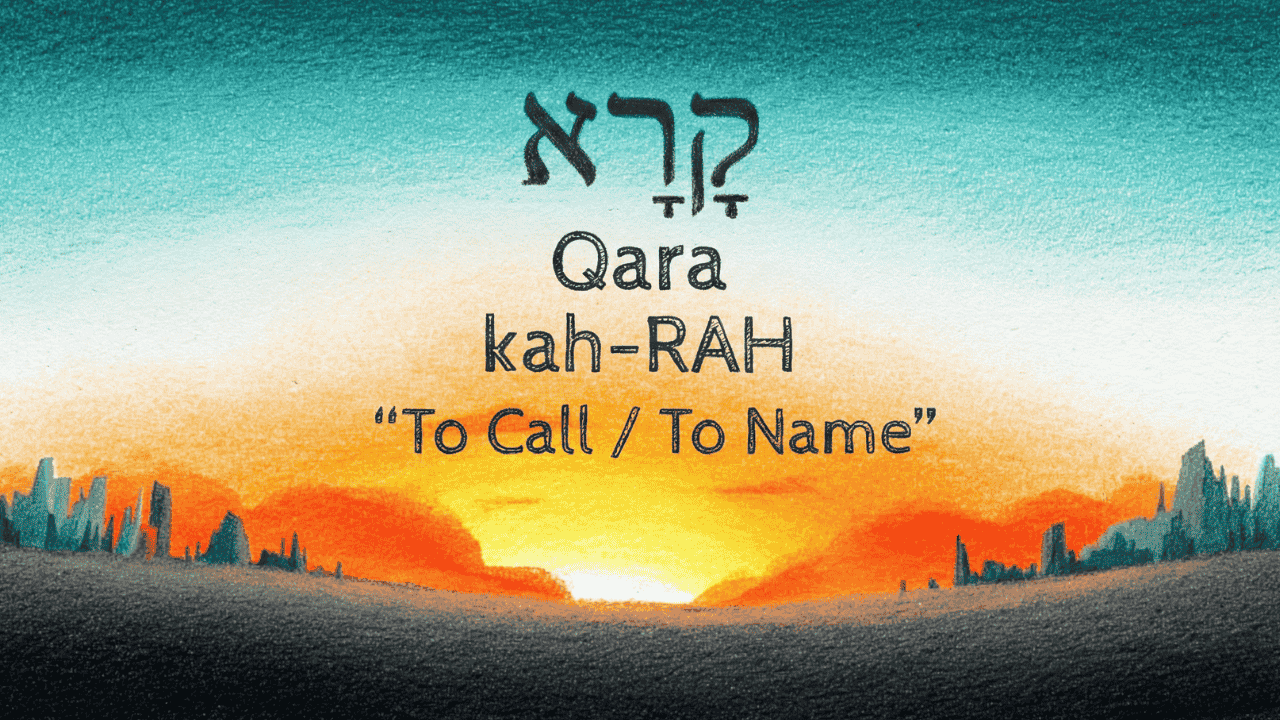
Why "Calling" and "Naming" Are the Same Hebrew Word
Most people search for their calling like it's a career quiz. But the Hebrew word tells a different story. Qara means both "to call" and "to name" — and it changes everything about identity.

Boasting in Weakness: What Paul's Strange Discipline Teaches U
Paul boasted in his weaknesses—gladly. The Greek word kauchaomai reveals why limitation isn't something to hide, but something to display.

What Does "It Is Finished" Mean? The Greek Word Teleō Explained
The Greek word behind "It is finished" appears somewhere surprising—in Paul's passage about weakness. What teleō reveals about God's finishing work in your life.
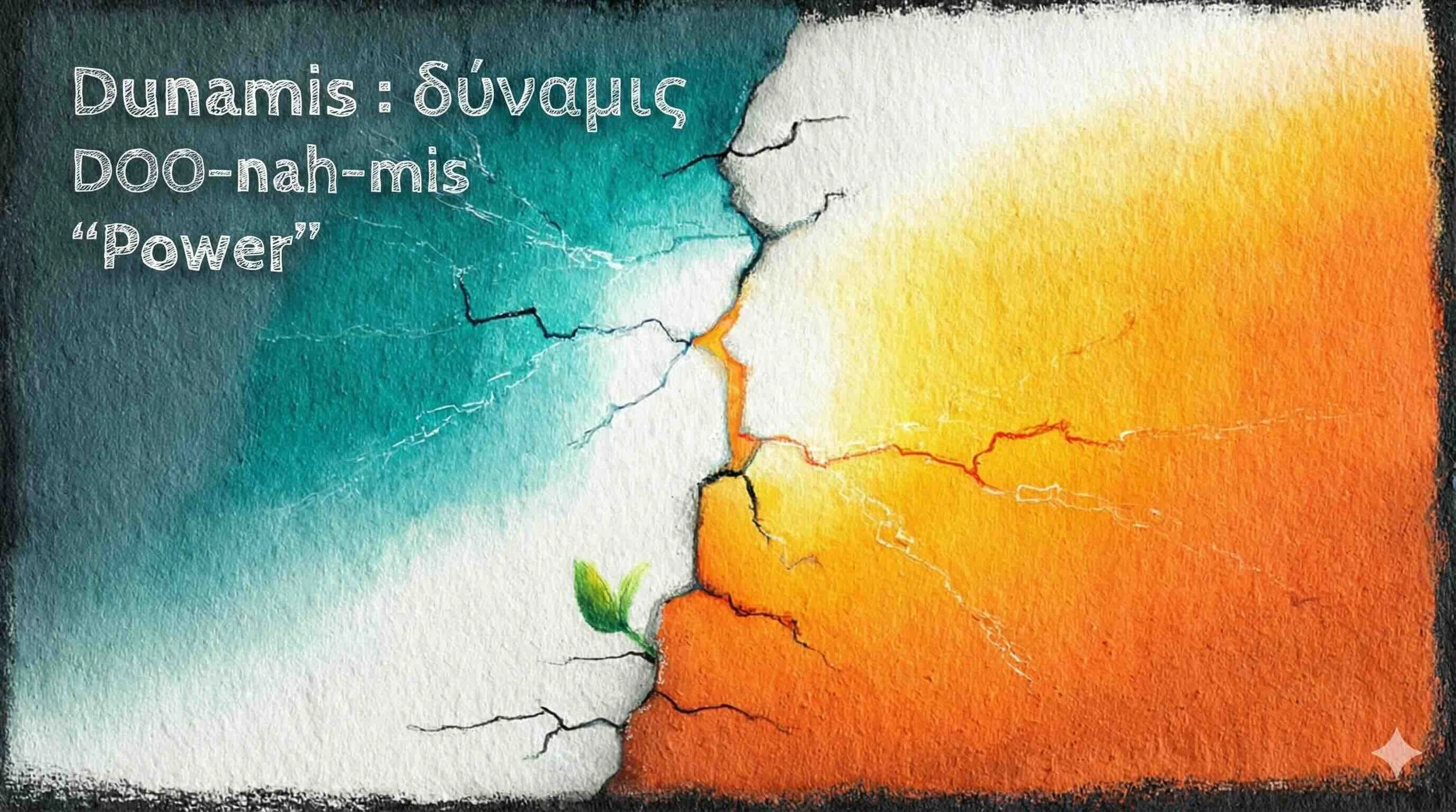
Power Made Perfect: The Math That Doesn't Add Up
Paul gives us an equation that breaks arithmetic. Power plus weakness equals perfect. The math doesn't work. And that's precisely the point.

Sufficient: The Underwhelming Promise That Changed Everything
When God told Paul "My grace is sufficient," it sounded underwhelming. But the Greek word arkeō reveals something different: sufficiency isn't about barely surviving—it's about being completely defended.

The Thorn You Can't Remove (And Weren't Meant To)
Paul called it a thorn. English translators agreed. But the Greek word skolops means something far more substantial and that changes how we read God's response.

Why God Said No to Paul's Prayer (2 Corinthians 12)
Paul prayed three times for healing. God said no. The Greek word for weakness doesn't mean "struggling." It means completely empty. And that's exactly where God's power shows up.

What Hagar's Encounter with God Reveals About Survival (Genesis 16)
She shouldn't still be breathing. That's the first thing you need to understand about Genesis 16:13. Hagar just met the living God, and she's checking her own pulse in disbelief.