DEC 26 | What the Shepherds Did Next | Luke 2
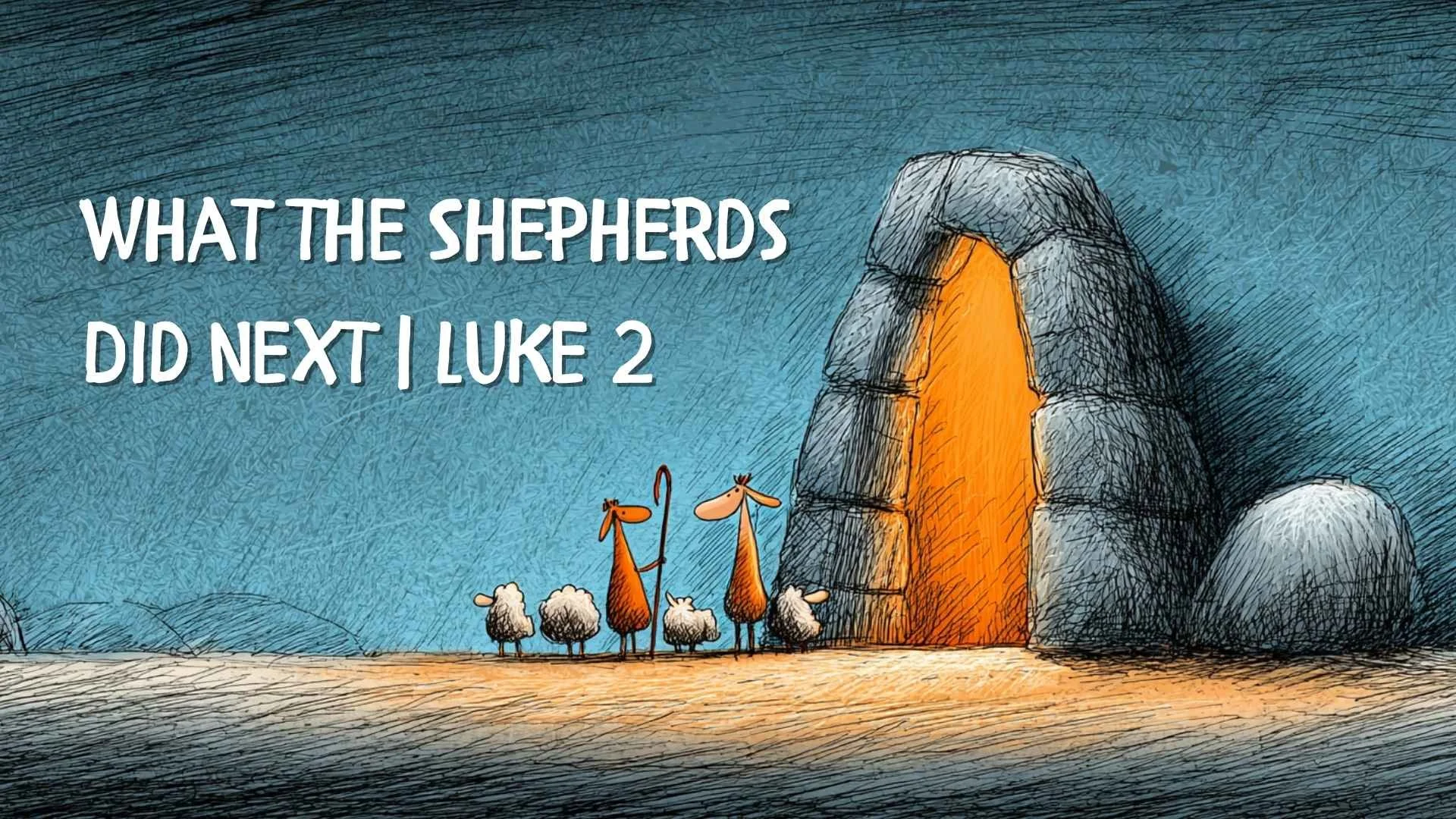
When the angels had left them and gone into heaven, the shepherds said to one another, "Let's go to Bethlehem and see this thing that has happened, which the Lord has told us about."
So they hurried off and found Mary and Joseph, and the baby, who was lying in the manger. When they had seen him, they spread the word concerning what had been told them about this child, and all who heard it were amazed at what the shepherds said to them. But Mary treasured up all these things and pondered them in her heart.
The shepherds returned, glorifying and praising God for all the things they had heard and seen, which were just as they had been told.
— Luke 2:15-20

The night before, everything changed. Angels filled the sky like a sudden storm of light and sound—glory breaking through the membrane between heaven and earth. The shepherds stood frozen on a hillside that had been ordinary until about thirty seconds ago, their hearts pounding, their sheep scattering, their minds failing to process what their eyes were seeing.
And then it was over. The angels ascended. The light faded. The silence rushed back in like water filling a gap. And Luke gives us one of the most understated transitions in all of Scripture: "When the angels had left them and gone into heaven..."
Gone. Just like that. The heavenly host returned to wherever heavenly hosts go when they are not terrifying shepherds, and the men were left standing in the dark, their breath visible in the cold air, sheep bleating nervously somewhere nearby. The glory had departed.
What do you do next?

The shepherds chose to go. They hurried off to Bethlehem—Luke uses a word that suggests urgency, almost running—and they found exactly what the angels had promised. A baby wrapped in cloths. A manger. A young mother and her bewildered husband. The Savior of the world, small enough to hold.
They told everyone. They became the first evangelists, these rough-handed men who smelled like lanolin and wood smoke, spreading the news through Bethlehem's crowded streets. They had seen something, and they could not keep it to themselves.
And then comes the verse we often rush past on our way to Christmas dinner: "The shepherds returned."
Returned where? To the fields. To the sheep. To the job they had been doing before heaven interrupted. The text does not say they quit shepherding to follow Jesus. It does not say they were promoted to something grander. They went back.
This is the part of the Christmas story nobody puts on greeting cards.

Think about December 26th. The wrapping paper is in the trash. The guests have gone home. The big meal is reduced to leftovers in plastic containers. The day after the celebration always feels a little hollow, doesn't it? Like the world should have changed more than it did. Like you should feel more transformed than you do.
The shepherds knew this feeling. They had witnessed the most significant birth in human history. They had heard angels sing. They had knelt before the Messiah in his feeding trough. And the next morning, they still had to check on the pregnant ewes. Still had to mend the broken section of fence. Still had to deal with the same cold, the same hunger, the same long hours on a dark hillside.
Everything had changed. And nothing had changed.
But Luke adds something crucial. They returned "glorifying and praising God." They did not return defeated or disappointed. They returned transformed—not in their circumstances, but in their vision. They saw the same sheep, the same hills, the same stars. But they saw them differently now. They knew something about the world that they had not known before.
God is in it.
That is what the incarnation does. It does not remove us from ordinary life—it saturates ordinary life with new meaning. The shepherds did not become something other than shepherds. They became shepherds who had seen the glory of God and now carried that vision into every midnight watch, every difficult birth, every predator circling the flock.
The path did not change. But the one walking it did.
Perhaps you are reading this on December 26th, or on some ordinary Tuesday three months from now. Either way, you know the feeling of returning. Back to the office after a retreat. Back to the hard marriage after the counseling session. Back to the same struggles after the worship conference. The high fades. The glory recedes. And you are left with the question: What now?
The shepherds answer with their feet. They go back. Not in resignation, but in worship. They have seen the baby, and now they carry him with them—not literally, but in the only way that matters. They know. They have seen.
And that changes everything, even when it changes nothing.
The path of faithfulness is rarely a path to somewhere new. Most of the time, it is a path back to the same place, the same duties, the same people—but with eyes that have been opened. The shepherds could never look at a lamb the same way again. They knew now that the Lamb of God had entered the world. Every ordinary sheep reminded them of an extraordinary salvation.
This is the long faithfulness: returning to the ordinary, carrying the extraordinary with you. Not escaping your life, but inhabiting it more fully because you know whose world this is. The day after glory is not a comedown. It is a commissioning. Go back to your sheep. Go back to your work, your family, your struggles. But go back glorifying. Go back praising. Go back as someone who has seen, and cannot unsee.
Today
When you return to your first "ordinary" task today—the dishes, the emails, the commute—pause before you begin. Say aloud or in your heart: "Lord, I have seen. Help me carry what I have seen into this." Then do the task, not as drudgery, but as worship.

An Invitation to go Deeper….
If today’s message spoke to you, join the FaithLabz 30-Day Prayer Challenge and strengthen your connection with God’s unshakable love. You are never alone—let’s grow together!