DEC 21 | The Girl in the Small Room
The Girl in the Small Room
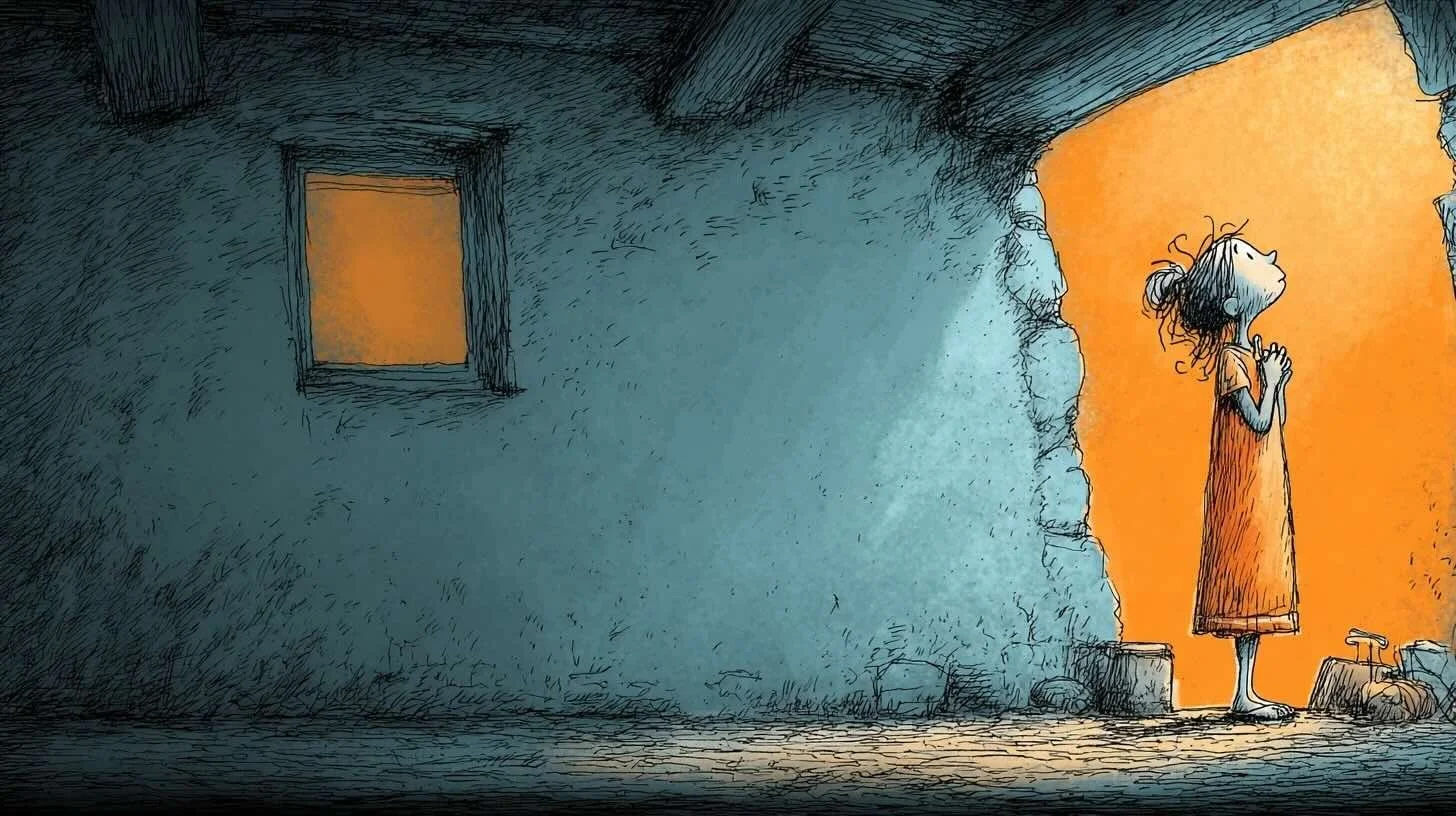
In the sixth month the angel Gabriel was sent from God to a city of Galilee named Nazareth, to a virgin betrothed to a man whose name was Joseph, of the house of David. And the virgin's name was Mary. And he came to her and said, "Greetings, O favored one, the Lord is with you!" But she was greatly troubled at the saying, and tried to discern what sort of greeting this might be. And the angel said to her, "Do not be afraid, Mary, for you have found favor with God. And behold, you will conceive in your womb and bear a son, and you shall call his name Jesus. He will be great and will be called the Son of the Most High. And the Lord God will give to him the throne of his father David, and he will reign over the house of Jacob forever, and of his kingdom there will be no end."
And Mary said to the angel, "How will this be, since I am a virgin?"
And the angel answered her, "The Holy Spirit will come upon you, and the power of the Most High will overshadow you; therefore the child to be born will be called holy—the Son of God. And behold, your relative Elizabeth in her old age has also conceived a son, and this is the sixth month with her who was called barren. For nothing will be impossible with God."
And Mary said, "Behold, I am the servant of the Lord; let it be to me according to your word." And the angel departed from her.
— Luke 1:26-38
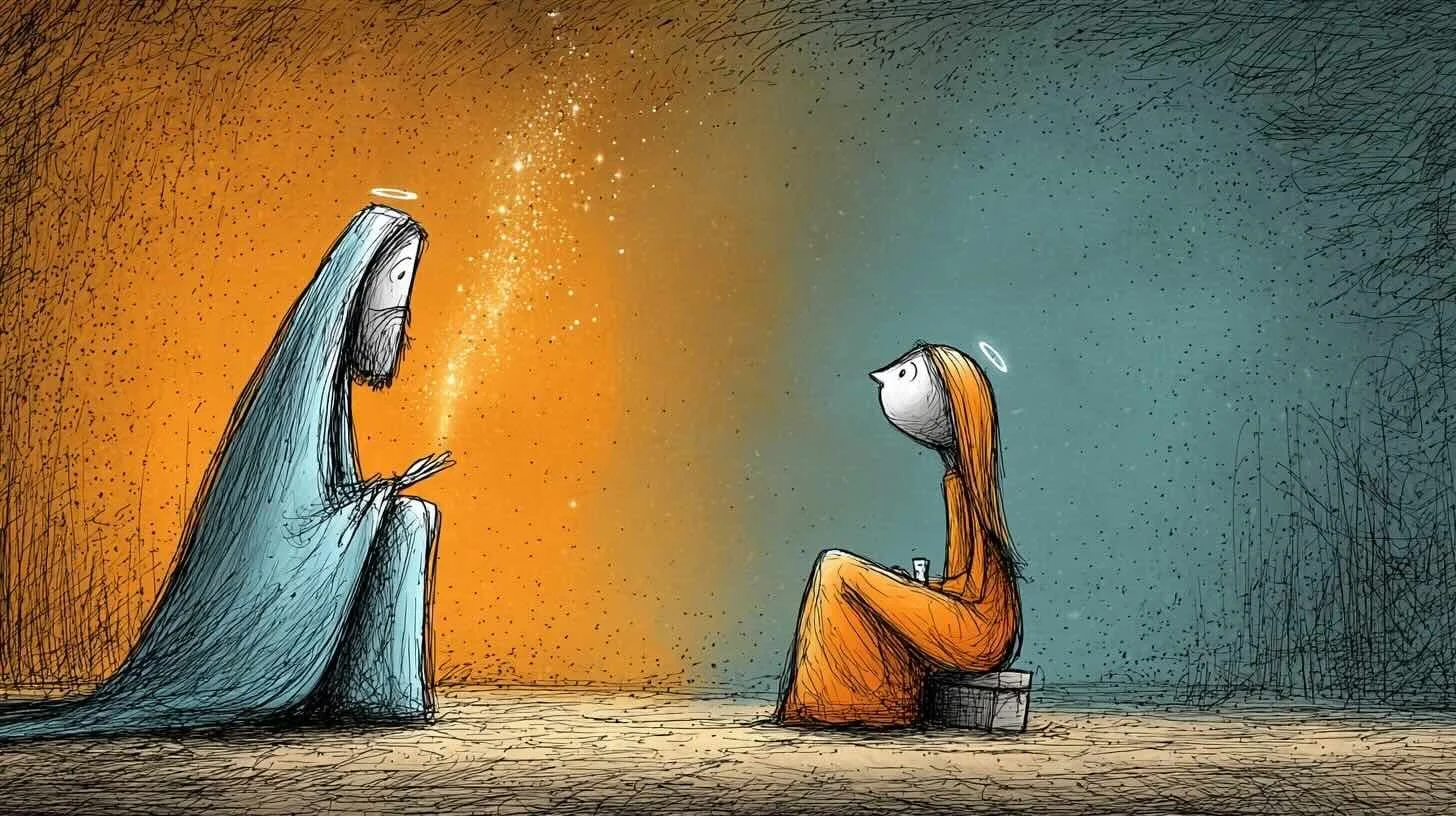
The room was probably small. That is not in the text, but it is in the history—first-century Nazareth was not a place of sprawling estates and marble floors. Nazareth was the kind of town other towns made jokes about. "Can anything good come out of Nazareth?" someone would later ask. The answer, it turns out, was yes. But on this particular day, no one knew that yet.
The girl in the small room was perhaps fourteen, maybe fifteen. Betrothed. Not yet married, not yet a mother, not yet the subject of Renaissance paintings with golden halos and serene expressions. She was, at this moment, simply Mary—a Hebrew name, Miriam, common as sparrows. There were probably a dozen Marys in Nazareth alone.
And then the angel appeared.
We do not know what Gabriel looked like in that moment, whether he materialized slowly like mist or arrived suddenly like a thunderclap. What we know is the first word he spoke: "Greetings." And then, immediately, a name—but not the name her parents gave her.
"O favored one."

The Greek word is kecharitomene—graced one, or one who has been favored. It is not a description of what Mary has done. It is a declaration of what God has decided about her. Before she consented, before she carried, before she labored and wept and watched her son die—before any of that, God had already named her. Favored. Graced. Chosen.
Luke tells us she was "greatly troubled" by this greeting. The word suggests more than mild confusion; it means she was agitated, thrown into turmoil. She tried to discern—there is that word, tried—what kind of greeting this might be. She did not immediately understand. She did not fall to her knees in serene acceptance. She was unsettled, turning the words over in her mind like stones in her hand, feeling their weight.
This is how it often goes when God names us. The name arrives before we are ready to wear it. The name sounds too large, too strange, too unlike the name we have grown comfortable answering to.
The angel kept speaking. Do not be afraid, Mary—and here he used her given name, anchoring the extraordinary in the ordinary, reminding her that this cosmic interruption was happening to her, a specific girl in a specific room in a specific nowhere town. You have found favor with God. You will conceive. You will bear a son. You shall call his name Jesus.
Notice: God was giving Mary a new name (favored one) at the same moment he was giving her the task of naming someone else. She would be the one to speak the name Jesus over that infant in the straw. The named becomes the namer. The graced one bestows grace with a word.

Mary's question was practical, almost clinical: "How will this be, since I am a virgin?" She was not doubting. She was asking for mechanics. This is not the skepticism of Zechariah, who earlier in the same chapter demanded proof and received silence as consequence. Mary's question was the honest inquiry of someone trying to understand what she has already, in some deep place, begun to accept.
And Gabriel's answer did not explain much. The Holy Spirit will come upon you. The power of the Most High will overshadow you. These are not instructions; they are invitations to trust what cannot be diagrammed. The angel offered evidence—your relative Elizabeth, the barren one, she is six months pregnant—and then a thesis statement for all of Scripture: "For nothing will be impossible with God."
Here is what happened next: Mary opened her mouth and consented to a name she had not chosen.
"Behold, I am the servant of the Lord; let it be to me according to your word."
She called herself doule—slave, servant. Another name, this one self-chosen, placed beneath the name God had given. Favored one. Servant of the Lord. Both names true. Both names shaping what she would become.
And the angel departed. The text does not say he vanished or dissolved or flew away. He simply departed, like someone leaving a room. And Mary was left there—still in Nazareth, still young, still unmarried, still living in the same small house—but carrying a new name and, soon, a new life.
The name came first. That is the pattern all through Scripture. God names Abram "Abraham"—father of many—when he has no children. God names Jacob "Israel"—one who strives with God—after a night of wrestling that left him limping. Jesus names Simon "Peter"—rock—when he is anything but solid. The name is not a description of what is. The name is a declaration of what will be.
And if you have trusted Christ, you have received a name too. Several, actually. Beloved. Child. Saint. Heir. These are not aspirations. They are not what you become if you try hard enough. They are what you already are—named by God before you could do anything to earn or ruin them.
Maybe, like Mary, the name still sounds strange to you. Maybe you have spent so long answering to other names—failure, disappointment, not-enough—that the new name feels like a coat that does not quite fit. That is all right. Mary was troubled too. She did not understand how the name would unfold. She only knew who had spoken it.
This Advent, four days before Christmas, the invitation is to receive the name again. Not to earn it. Not to live up to it first. Simply to hear it spoken over you by the same God who spoke over a girl in a small room in a forgettable town: Favored one. I am with you.
Today
Find a quiet moment—maybe before bed tonight, maybe in your car before you walk into work. Speak this sentence out loud: "I am favored by God. That is not something I earned; it is something I received." Let the words sit. Notice if they feel strange. That strangeness is not unbelief; it is the weight of a name that is still becoming true in your bones.

An Invitation to go Deeper….
If today’s message spoke to you, join the FaithLabz 30-Day Prayer Challenge and strengthen your connection with God’s unshakable love. You are never alone—let’s grow together!