NOV 29 | Why the Early Church Looked More Like a Potluck Than a Sunday Service
Why the Early Church Looked More Like a Potluck Than a Sunday Service
And What That Means for How We Gather Today
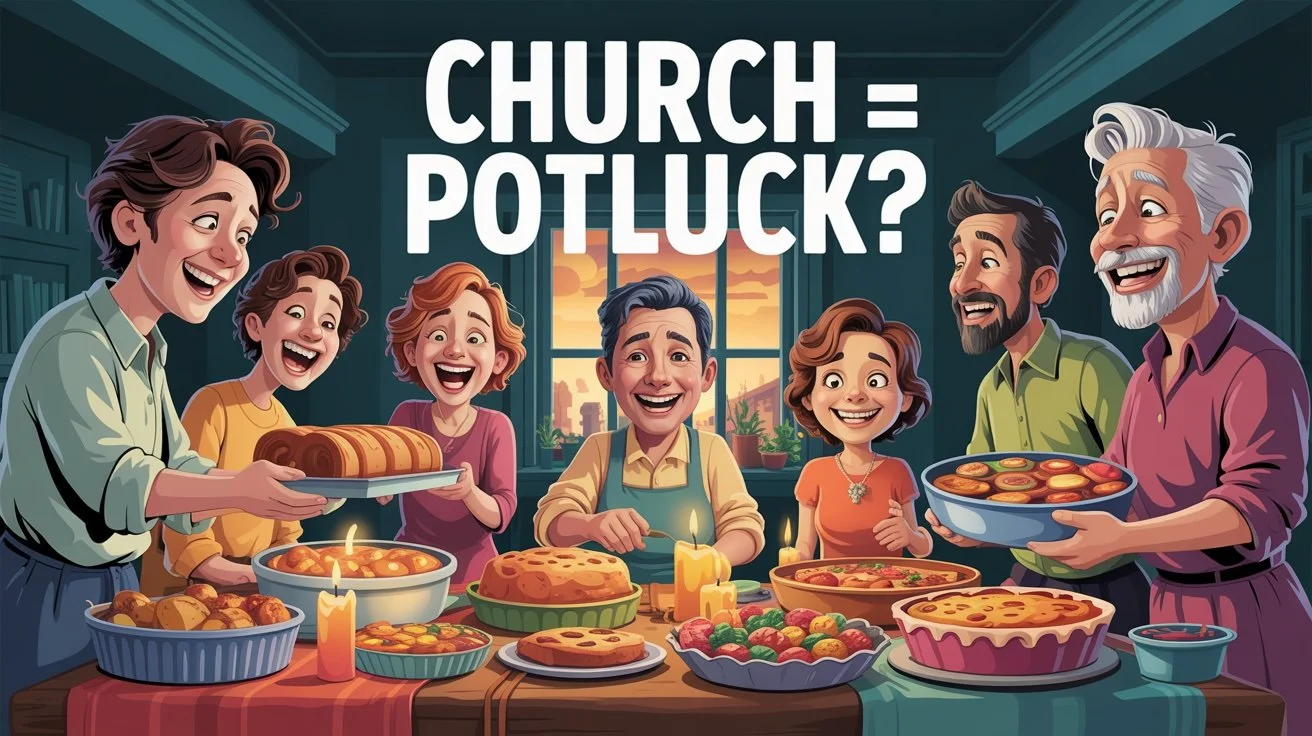
Have you ever noticed what happens at a potluck dinner? There's something almost miraculous about it. You show up carrying your one dish—maybe it's your grandmother's recipe, maybe it's something you grabbed from the store on your way over—and you place it on a table alongside fifteen other dishes you didn't plan, didn't coordinate, and couldn't have predicted.
And somehow, impossibly, there's always enough.
Nobody leaves hungry. The variety is better than any single cook could have produced. And there's this unspoken trust happening: you're betting that what everyone else brings will complement what you brought. You're participating in something bigger than your individual contribution.
What if I told you that's exactly what the early church looked like?
Not a polished production. Not rows of seats facing a stage. Not a consumer experience where you show up, receive, and leave. But a potluck. A table. A shared meal where everyone brings something and everyone is fed.
What Luke Actually Described in Acts 2
When we read the book of Acts, we're reading the origin story of the Jesus movement. And in Acts 2:46-47, Luke gives us this snapshot of what the earliest Christian community looked like right after Pentecost—right after the Spirit fell, right after Peter preached, right after 3,000 people suddenly joined this fledgling movement.
Here's what he wrote:
"Every day they continued to meet together in the temple courts. They broke bread in their homes and ate together with glad and sincere hearts, praising God and enjoying the favor of all the people."
Now, if you've been around church for any length of time, you've probably heard this passage before. Maybe it was used to encourage small group attendance or to promote a church potluck event. But I want you to look closer, because there's something happening here that we've largely lost.
That phrase "broke bread" isn't just ancient-speak for "had dinner together." The Greek phrase is klasei tou artou—literally "the breaking of the bread"—and it carried a double meaning for Luke's original audience. This was both their shared meals AND their communion. They didn't separate the sacred from the ordinary. The dinner table and the Lord's table were the same table.
Which means fellowship wasn't the opening act before the real spiritual stuff happened.
The meal WAS the spiritual stuff.
The Joy They Couldn't Contain
Here's something that jumped out at me when I studied this passage more closely. Luke uses a very specific word to describe how these early believers gathered. He says they ate together with "glad" hearts.
In Greek, that word is agalliasis. And this isn't a polite, reserved, religious-contentment kind of word. This is an exuberant, jump-up-and-down, can't-contain-yourself kind of joy. It's the same word used to describe John the Baptist leaping in Elizabeth's womb. It's explosive gladness.
These people weren't gathering out of obligation. They weren't showing up because they felt guilty or because someone guilted them into attendance. They gathered with JOY. Real, visible, contagious joy.
And here's the thing about that kind of joy—it's attractive. Luke tells us they were "enjoying the favor of all the people." The surrounding community respected them. People on the outside wanted in, not because of a slick marketing campaign, but because something genuine was happening at those tables.
You know what kills churches? When gathering becomes duty. When showing up feels like paying a toll. When community becomes another item on an already-exhausting to-do list.
But the early church? Everyone brought something. Nobody left hungry. And there was enough joy that it spilled over into the streets.
The Decentralized Table
Here's another detail we often miss. Luke says they broke bread "in their homes." Not one home. Homes. Plural.
This wasn't a single potluck happening at church headquarters. This was hundreds of potlucks happening simultaneously across Jerusalem. Organic. Decentralized. Intimate.
Picture it: Someone's opening their door saying, "Come in, we've got room." Someone else is walking up the street carrying bread. Someone's pouring wine. Someone's probably stuck doing dishes in the back.
This is what hospitality looked like in the early church—and hospitality always costs something. Opening your home means letting people see your mess. Breaking bread means there's less for you. Creating space for others requires sacrificing your own comfort and convenience.
But that's exactly what made it powerful.
The early church didn't outsource community to a building or a program. They practiced it in living rooms and around kitchen tables. They made space in their actual lives for actual people.
What This Means for Us Today
So what does a two-thousand-year-old description of house churches in Jerusalem have to do with us? Maybe more than we'd like to admit.
We live in an age of spiritual consumption. We can stream sermons, download worship music, listen to podcasts, and engage with Christian content without ever having to sit across from another human being. And there's nothing inherently wrong with any of those things—I'm making content like this, after all.
But here's the tension: you can consume Christian content and still starve for Christian community.
Acts 2 shows us a picture of faith that isn't a spectator sport. It's participatory. It's potluck. Everyone brings something. Everyone is fed. And the nourishment comes not from watching someone else, but from being present with each other.
What Are You Bringing to the Table?
I want to leave you with a question—maybe two questions, actually.
First: What are you bringing to the table?
Not just on Sunday. Today. Tomorrow. When the holiday chaos settles, when the relatives go home, when normal life resumes—what are you contributing to someone else's spiritual nourishment?
Maybe it's your gift of listening. Maybe it's showing up when someone's going through a hard season. Maybe it's opening your home when it's inconvenient. Maybe it's just being consistent—the person who keeps showing up.
The potluck only works when people bring something. And in God's economy, what you bring doesn't have to be impressive. It just has to be offered.
Second question: Are you letting others nourish you?
This might be the harder one. Some of us are great at giving but terrible at receiving. We'll serve others all day long but struggle to let anyone serve us. We keep our needs hidden, our struggles private, our real selves protected behind a carefully curated image.
But that's not potluck. That's performance.
The early church broke bread together. They let others see what they brought. They received what others offered. The table only works when everyone participates—both in giving AND receiving.
The Table Is Bigger Than You Think
Here's the beautiful thing about Luke's description in Acts 2: it ends with growth. "And the Lord added to their number daily those who were being saved."
The joy was so real, the generosity so obvious, the community so genuine—that people wanted in. Not because of a program. Not because of production value. Because something was happening at those tables that you couldn't find anywhere else.
God's table is bigger than we think. There's always room. And somehow—mysteriously, beautifully—there's always enough.
So this week, as you're recovering from the holiday gatherings, as you're transitioning back into normal rhythms, consider this invitation: What would it look like for you to practice potluck church?
Maybe it's inviting someone over for a simple meal. Maybe it's joining a small group you've been avoiding. Maybe it's finally letting someone see the real you instead of the polished version.
Because in the end, faith was never meant to be consumed.
It was meant to be shared.
Around a table. With bread. With others. With joy.
Everyone brings something. Nobody leaves hungry.
That's potluck church. And it still works today.
What does "potluck church" look like in your life? What are you bringing to the table, and who's feeding you? I'd love to hear your thoughts in the comments below.

An Invitation to go Deeper….
If today’s message spoke to you, join the FaithLabz 30-Day Prayer Challenge and strengthen your connection with God’s unshakable love. You are never alone—let’s grow together!