DEC 10| When Jesus Used Silence: The Radical Power of Saying Nothing (John 8:6-9)
The Silence That Changed Everything
We spend our entire lives running from awkward silences. We fill every pause with nervous chatter. We craft instant responses to every accusation. We've been trained to believe that silence equals weakness.
But what if everything we've learned about silence is wrong?
In one of the most dramatic confrontations in scripture, Jesus faced a hostile crowd demanding an immediate answer. Religious leaders had dragged a terrified woman into the public square. They hurled accusations. They quoted Moses. They demanded Jesus take a side.
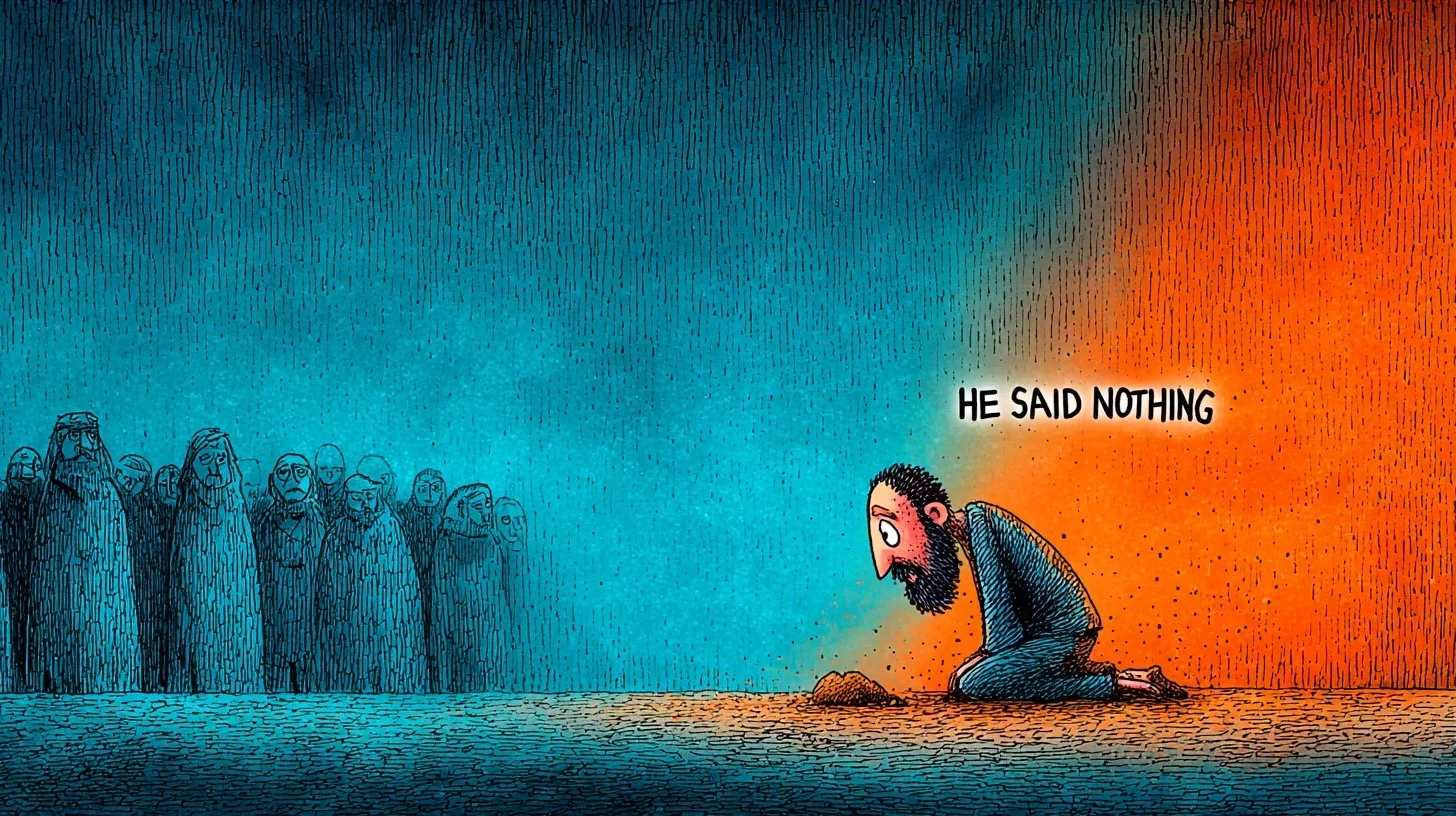
And Jesus responded with the most unexpected weapon imaginable. He said absolutely nothing.
This wasn't avoidance. This wasn't weakness. This was strategic, intentional, healing silence. And understanding why Jesus went silent might transform how you handle every difficult conversation in your life.
The Setup: A Trap Disguised as a Question
To understand the power of this moment, you need to see the trap being set.
Religious leaders burst into the temple courts dragging a woman they claimed was caught in the act of adultery. They threw her at Jesus' feet and posed their question with practiced innocence: "Moses commanded us to stone such women. What do you say?"
Notice what's missing from this scene. Where's the man? Adultery requires two people. Yet only the woman stands accused. This detail reveals everything about their true intentions.
This wasn't about justice. This was a carefully orchestrated setup.
If Jesus said "stone her," he contradicted his message of grace and mercy. He'd also potentially violate Roman law, which reserved capital punishment for Roman authorities. If Jesus said "let her go," he contradicted Moses and could be accused of dismissing scripture.
Every answer seemed wrong. Every response played into their hands.
So Jesus gave no answer at all.
The Unexpected Response: Getting Low
Here's where the story takes its remarkable turn.
John 8:6 tells us Jesus bent down and started writing on the ground with his finger. The Greek word used here is katakypto, meaning to stoop or bow down low.
Picture the scene. Everyone else is standing. The accusers tower over their victim. The woman cowers on the ground. The crowd presses in for the spectacle.
And Jesus gets lower than everyone.
He breaks eye contact with the mob. He refuses to participate in the public shaming ritual. He doesn't dignify the performance with his attention.
Scholars have debated for two thousand years what Jesus wrote in the dust. Some suggest he listed the accusers' sins. Others believe he quoted Old Testament prophecies. A few think he simply doodled while thinking.
Here's what matters: the writing wasn't the point. The silence was.
Why Silence Works When Words Fail
When Jesus refused to speak, he fundamentally changed the dynamics of the confrontation.
The religious leaders had prepared for a debate. They had their scripture citations ready. They had their logical arguments rehearsed. They expected verbal combat, and they were confident they'd win.
Silence gave them nothing to fight against.
Instead of engaging with their trap, Jesus created space. And in that space, something unexpected happened. Each accuser was left alone with his own thoughts. His own memories. His own guilt.
The external confrontation became an internal reckoning.
This is the hidden power of strategic silence. Words let people defend themselves. Words give them something to argue against. But silence? Silence turns the mirror inward.
One by one, the accusers dropped their stones and walked away. The text includes a fascinating detail: the oldest left first. These were the men who had lived long enough to accumulate the most regrets. They couldn't pretend anymore.
The Biblical Pattern of Sacred Silence
This moment with the woman caught in adultery wasn't an isolated incident. Throughout scripture, God consistently uses silence for his deepest work.
When Elijah fled to Mount Horeb, he expected God to speak through dramatic displays. Fire came, but God wasn't in the fire. An earthquake shook the mountain, but God wasn't in the earthquake. Wind tore the rocks apart, but God wasn't in the wind.
God spoke in a still, small voice. A whisper. Almost silence.
The Psalms repeatedly call us to stillness. "Be still and know that I am God." The Hebrew word translated "be still" literally means to stop striving, to let go, to cease from activity.
Jesus himself modeled this pattern throughout his ministry. He regularly withdrew to solitary places. Not to escape people, but to hear his Father clearly. His most important decisions came after nights of silent prayer.
There's something about silence that opens doors words cannot unlock.
Our Allergic Reaction to Quiet
Modern life has declared war on silence.
Every moment must be filled. Every opinion must be stated immediately. Every controversy demands an instant hot take. We scroll, we stream, we podcast, we playlist. Silence has become the enemy.
Think about your own discomfort with quiet. How quickly do you reach for your phone during a pause in conversation? How often do you speak just to fill empty air? How rarely do you sit without input, noise, or distraction?
We've trained ourselves to fear what we might hear in the silence. We're terrified of being alone with our own thoughts. We're afraid of what God might say if we stopped talking long enough to listen.
The religious leaders in John 8 couldn't handle the silence either. It forced them to confront themselves. And one by one, they fled.
When Silence Heals Better Than Speech
Consider the relationships in your life right now. The ongoing arguments. The unresolved tensions. The conversations that keep circling without resolution.
How many of those situations have been made worse by more words?
Sometimes the most loving thing you can do is stop talking. Stop defending. Stop explaining. Stop trying to win.
This doesn't mean silence is always appropriate. Sometimes situations demand that we speak up, especially against injustice. But many of our conflicts don't need more words. They need more space.
Strategic silence says: I don't need to control this outcome. I don't need to prove my point. I trust that truth can work without my constant commentary.
What Jesus Actually Said (Eventually)
After the crowd dispersed, Jesus finally spoke. But notice what he said and what he didn't say.
He didn't lecture the woman about her sin. He didn't deliver a sermon about moral purity. He didn't shame her or demand an explanation.
He asked a simple question: "Woman, where are your accusers? Has no one condemned you?"
She answered: "No one, Lord."
Then Jesus spoke the words that have echoed through centuries: "Neither do I condemn you. Go now and leave your life of sin."
Grace came first. The call to transformation came second. And both came after silence had done its preparatory work.
A Practice for This Week
Here's a challenge that might feel deeply uncomfortable.
This week, when you feel the pressure to respond immediately in a tense situation, try this instead. Before defending yourself, pause. Before explaining your position, breathe. Before fixing, judging, or correcting, wait.
Get low, like Jesus did. Refuse to participate in the spectacle. Create space for something other than your words to work.
You might discover that silence accomplishes what your arguments never could.
The Space Where Healing Lives
The woman caught in adultery walked into that public square expecting death. She experienced something else entirely. Not because Jesus gave a better argument than her accusers. Not because he out-debated them theologically.
She experienced grace because Jesus refused to play their game at all.
Sometimes healing doesn't come from the right words. It comes from the space where words used to be.
That's the radical, counterintuitive, wildly uncomfortable truth hidden in John 8.
Silence isn't emptiness. It's possibility. It's room for the Spirit to move. It's space for hearts to soften. It's the pause that lets grace arrive.
What might happen this week if you trusted silence more than your own words?

An Invitation to go Deeper….
If today’s message spoke to you, join the FaithLabz 30-Day Prayer Challenge and strengthen your connection with God’s unshakable love. You are never alone—let’s grow together!