DEC 16 | The Tithe of Attention: What It Means to Give God Your Best Focus
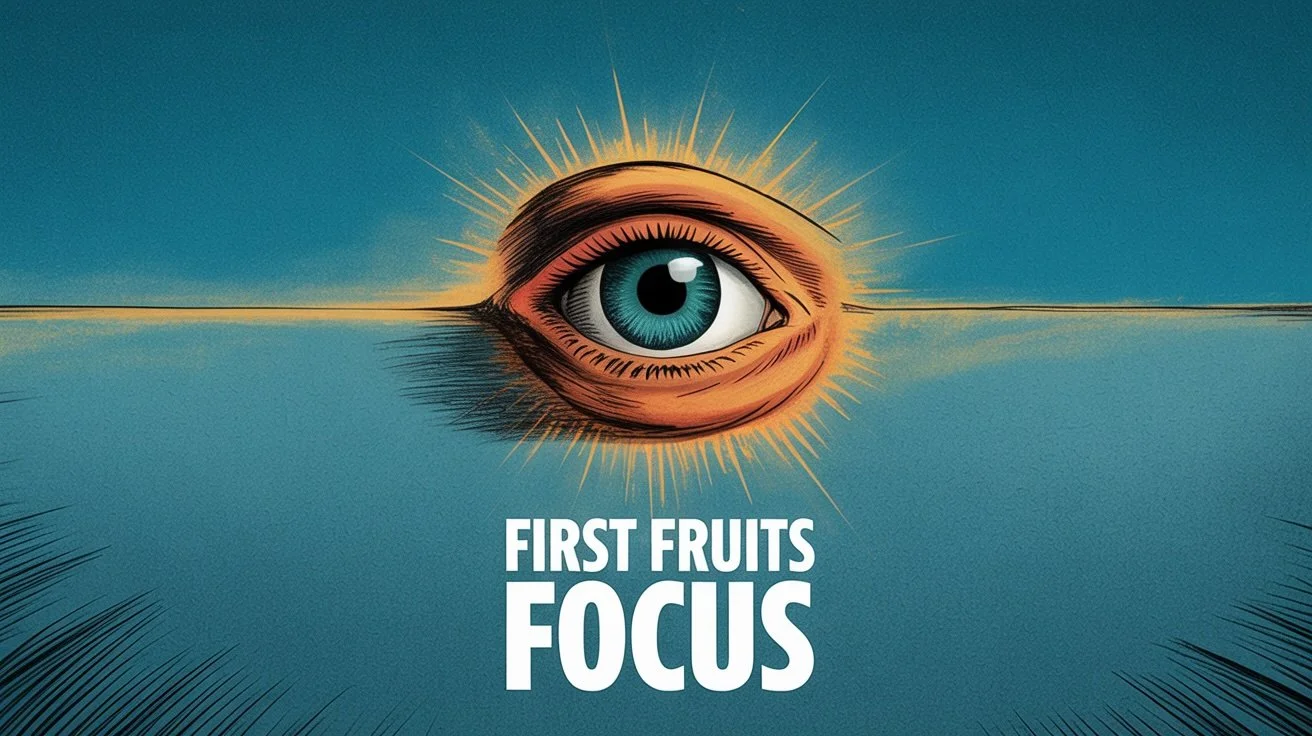
Key Passage: "Mary… sat at the Lord's feet and listened to his teaching. But Martha was distracted with much serving." — Luke 10:39-40 (ESV)
Big Idea: Your attention is the most valuable thing you own—and God wants the first portion, not the scraps.
What this will give you today: A new way to understand what it means to be present with God when everything else is screaming for your focus.
The moment you realize this is about you
You've done it again.
You sat down to pray, and three minutes in you were mentally rewriting an email you sent yesterday. You opened your Bible app and then—without any conscious decision—found yourself scrolling Instagram. You told yourself you'd spend time with God "when things settle down," but things never settle down, do they?
And the strange part? You're not even sure where your attention went. It just… leaked. Like a slow tire losing air, you arrived at the end of another day with nothing left for the One who made you.
Here's the uncomfortable truth: You probably give your boss better focus than you give God.
Not because you love your boss more. But because your boss has a deadline. God, apparently, can wait.
Martha would understand. She was surrounded by the sacred and still managed to miss it—not because she was sinful, but because she was busy. And busy feels so righteous.
But what if the real offering God is asking for isn't more activity? What if it's simply you, undivided, for a few unhurried minutes?
The common assumption that quietly drains people
Most of us carry an unspoken belief that goes something like this:
God knows I'm busy. He understands. What matters is that I'm doing good things, serving people, keeping the plates spinning. I'll have time for deeper stuff later—when the kids are older, when work slows down, when life isn't so chaotic.
It sounds reasonable. It even sounds humble.
But here's where it breaks down: "later" is a lie we keep telling ourselves while "now" slips through our fingers.
The assumption that God is fine with our scraps—that He's just happy we showed up, distracted and half-present—actually reveals what we believe about Him. It assumes He's not that interesting. That sitting with Him is a duty, not a gift. That what He offers can't possibly compete with what the world demands.
Martha wasn't serving Satan. She was preparing dinner for Jesus. And somehow, even holy activity became a wall between her and the actual presence of God.
This is the danger of the good: it can crowd out the best.
And in a world where your attention is literally bought and sold, where apps are designed by neuroscientists to hijack your focus, the idea that God deserves your first and best attention sounds almost countercultural. Because it is.
What the passage actually says when you slow down
Luke sets the scene simply. Jesus enters a village. A woman named Martha opens her home to Him. So far, so hospitable.
But then Luke introduces a contrast that has echoed through centuries:
"And she had a sister called Mary, who sat at the Lord's feet and listened to his teaching. But Martha was distracted with much serving." (Luke 10:39-40)
Notice what Mary does: she sits and she listens. These are not passive words. In that culture, to sit at a rabbi's feet was to assume the posture of a disciple—a student, a learner, someone who came to receive. Mary wasn't zoning out. She was locked in.
And Martha? The text says she was distracted with much serving. The Greek word here—perispao—means to be pulled away, dragged in different directions, over-occupied. Martha's body was in the room, but her attention was fractured into a thousand pieces.
Then comes Martha's complaint: "Lord, do you not care that my sister has left me to serve alone? Tell her then to help me." (v. 40)
There's accusation in that question. Do you not care? Martha is exhausted, resentful, and looking for Jesus to validate her frustration.
But Jesus doesn't take the bait.
"Martha, Martha, you are anxious and troubled about many things, but one thing is necessary. Mary has chosen the good portion, which will not be taken away from her." (v. 41-42)
Here's the twist: Jesus doesn't condemn service. He doesn't say the dishes don't matter. But He names what's actually happening—Martha is anxious and troubled about many things. Her attention is splintered. And in all her doing, she's missing the one thing that matters most in that moment.
Mary chose the "good portion." Not the lazy portion. Not the irresponsible portion. The good portion.
And here's the tender part: Jesus says it will not be taken away from her. The food will be eaten. The dishes will get dirty again. The to-do list will regenerate by morning. But what Mary received—presence, teaching, connection—that's permanent. That stays.
Your focused attention on God produces something that lasts. Everything else is eventually swept away.
Where this shows up in real life
Picture this:
You finally get twenty minutes alone. The house is quiet. You could pray. You could read. You could just sit with God and breathe.
But instead, you grab your phone—just to check one thing—and suddenly you're eleven minutes into a video about how to organize your pantry, followed by a news article that made you angry, followed by a text thread you forgot to answer, and now your twenty minutes is gone and you're more depleted than when you started.
You didn't choose to ignore God. You just never chose not to.
This is the modern Martha moment. We're not distracted by dinner prep—we're distracted by everything, all the time, and none of it is as loud as the still small voice we keep meaning to hear.
The tithe of attention means treating your focus like a first fruit—not giving God the dregs at 11 p.m. when your brain is mush, but carving out space when you're actually awake. Alert. Capable of presence.
It's not about hours. It's about quality. Five minutes of undivided attention may be worth more than thirty minutes of half-hearted background prayer.
God doesn't need your productivity. He wants you—the version of you that's actually in the room.
Five small practices for this week
1. The First Five
Do this: Before you look at your phone in the morning, spend five minutes in silence with God. No agenda. No requests. Just presence.
Why it matters: You're training your attention to land on God before the world gets its hooks in you. First fruits means first.
Breath prayer: "My attention is Yours."
2. The Phone Fast Before Scripture
Do this: When you sit down to read your Bible, put your phone in another room—not just silenced, but physically removed.
Why it matters: Proximity creates temptation. If your phone is within reach, part of your brain is always monitoring it. Remove it, and you remove the pull.
Breath prayer: "One thing is necessary."
3. The Micro-Pause
Do this: Three times today, stop for sixty seconds. Close your eyes. Acknowledge God's presence. Then continue.
Why it matters: This trains your brain to remember that God is already here. You're not conjuring Him—you're waking up to what's already true.
Breath prayer: "You're here. I'm here. That's enough."
4. The Evening Audit
Do this: At the end of the day, ask yourself: Did God get my best attention today—or my leftovers? Don't judge the answer. Just notice.
Why it matters: Awareness precedes change. You can't shift what you don't see.
Breath prayer: "Tomorrow, my first and my best."
5. The Martha Confession
Do this: When you feel yourself spinning into anxious activity, pause and pray: "Lord, I'm being Martha right now. Help me sit."
Why it matters: Naming the pattern breaks its power. You're not suppressing the anxiety—you're bringing it to Jesus.
Breath prayer: "Anxious about many things. Choosing the one."
When this feels hard: the 3 pushbacks people feel
Emotional pushback: "I feel guilty when I'm not doing something productive."
That guilt is real—and it's also a lie. Somewhere along the way, you absorbed the message that your worth is tied to your output. But God never said, "I love you because you hustle." Rest and attention are not laziness. They're acts of trust. You're allowed to stop. The world will survive.
Practical pushback: "I genuinely don't have time for this."
I hear you. And I'd gently push back: you don't have time for a lot of things, and yet somehow your phone gets three hours a day. The issue isn't time—it's priority. Five minutes exists in your schedule. The question is whether God gets it or TikTok does.
Theological pushback: "Isn't God everywhere? Why does He need my focused attention?"
He doesn't need it—He wants it. And there's a difference. God is everywhere, yes. But relationship isn't just about proximity; it's about presence. You can sit next to someone for hours and never really be with them. Focused attention is how love is expressed. God wants to be with you, not just around you.
Questions you may have
Q: Is it wrong to multitask while praying?
Not necessarily—but it's worth asking what you're training yourself to believe. If you only pray while driving or doing dishes, you may be unintentionally communicating to your own soul that God isn't worth your full attention. Mix it up. Let some prayers be undivided.
Q: What if I can't focus for more than a few minutes?
Start there. Seriously. Two minutes of real presence beats twenty minutes of distracted performance. Your focus is a muscle. It will grow. Be patient with yourself.
Q: Doesn't God care more about my obedience than my attention?
They're not opposites. Attention is a form of obedience. Jesus told Martha that Mary chose the good portion—and choosing the good portion required focus. Obedience without attention becomes mechanical religion. God wants your heart, not just your hands.
Reflection questions
When was the last time I gave God my undivided attention—not my leftovers?
What most often pulls my focus away from spiritual presence? (Be specific.)
Do I subconsciously believe that busyness is more valuable than stillness?
What would change if I treated my attention like a tithe—giving God the first and best?
Where is Jesus inviting me to sit at His feet this week?
A closing blessing
May you discover that your attention is not a burden to manage but a gift to give.
May you learn to sit before you serve, to listen before you labor.
And when the world screams for your focus—when the to-do list grows and the notifications multiply—may you hear the gentle voice of Jesus saying your name, twice, calling you back to the one thing that cannot be taken away.
You are not what you produce. You are who you pay attention to.
Go in peace. And go present.

An Invitation to go Deeper….
If today’s message spoke to you, join the FaithLabz 30-Day Prayer Challenge and strengthen your connection with God’s unshakable love. You are never alone—let’s grow together!