DEC 14 | Holy Curiosity: What Moses Knew About Wonder That We've Forgotten
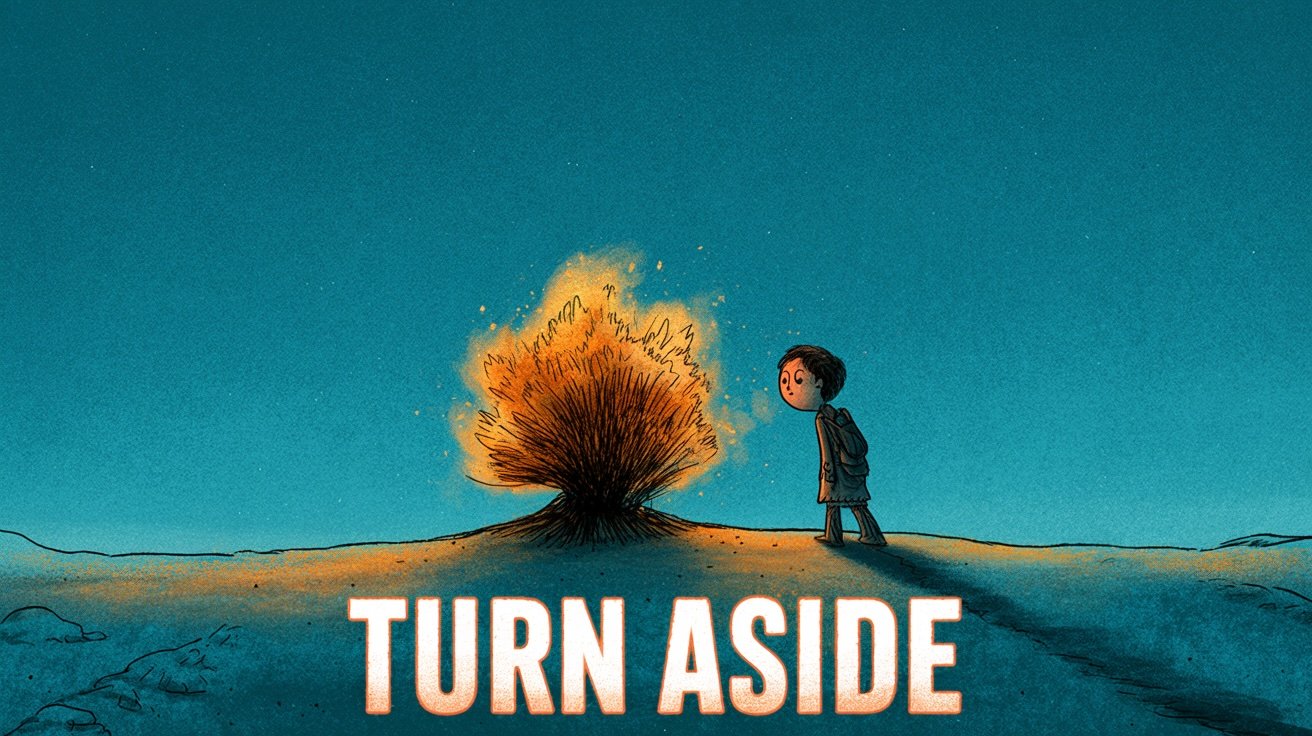
Key Passage: "And Moses said, 'I will turn aside to see this great sight, why the bush is not burned.' When the LORD saw that he turned aside to see, God called to him out of the bush." — Exodus 3:3-4
Big Idea: God speaks to those who stop long enough to wonder.
What this will give you today: A way to recover joyful curiosity this Advent—without naivety and without cynicism.
A quick word before we go deeper
Here's the thing about curiosity: we used to have it.
Remember being seven years old and asking why the sky was blue? Why dogs dream? Why your grandmother's hands looked like maps? You weren't trying to be annoying. You were doing what humans are made to do—wonder.
Somewhere along the way, most of us stopped. Life got heavy. Disappointment taught us to stop expecting surprises. Cynicism felt safer than hope.
But Advent whispers something different. It says the God of the universe once showed up in the most unexpected place imaginable—a feeding trough, a teenage mom, a forgotten town. And before that? A bush on fire that wouldn't stop burning, waiting for someone curious enough to turn aside.
This week, we're talking about holy curiosity. Not naive optimism. Not performative wonder. The real thing.
The moment you realize this is about you
Picture this: You're scrolling through your phone at 6:47 AM. Coffee's lukewarm. The news is loud. Your brain is already rehearsing the day's anxieties before your feet hit the floor.
And somewhere in the scroll, something catches your eye. Maybe it's a verse someone posted. Maybe it's a photograph of morning light through a window. Maybe it's a question from your kid that lands differently today.
For half a second, you feel it—a flicker of wonder.
Then you keep scrolling.
You had a burning bush moment. And you walked right past it.
Here's what's painful: we do this constantly. Not because we're bad people, but because we've been trained to move fast, stay guarded, and protect ourselves from disappointment. Cynicism is armor. Wonder feels dangerous.
But Moses—dusty, exiled, eighty-year-old Moses—did something radical in the wilderness that day. He stopped. He turned. He let himself be curious.
And that's when God spoke.
The assumption that quietly drains us
Most of us carry a silent belief we've never said out loud:
If God wanted to get my attention, He would. He doesn't need me to be curious. He's God.
It sounds humble. It's actually lazy—and a little bitter.
This assumption turns faith into passivity. We wait for lightning bolts and angel choirs, and when they don't come, we assume God is silent. Or worse, distant. Or worst of all, uninterested.
But Scripture tells a different story. Over and over, God meets people in the middle of ordinary moments—not because they were special, but because they were paying attention.
Abraham looked up at the stars. Jacob wrestled through the night. Mary pondered things in her heart. The shepherds went to see.
Curiosity isn't a personality trait. It's a posture. It's the willingness to say, "This might mean something. I'm going to look closer."
And here's the uncomfortable truth: when we stop being curious, we stop seeing. Not because God stops showing up—but because we've stopped turning aside.
What the passage actually says when you slow down
Let's sit with Exodus 3 for a minute.
Moses is 80 years old. He's been in the wilderness for 40 years, tending sheep that aren't even his. He's a former prince turned fugitive turned shepherd. If anyone had reason to be cynical, it was him.
His life looked nothing like his early promise. The great rescue he'd tried to orchestrate in Egypt? Failed. Spectacularly. He killed a man and had to run. Now he's watching goats in the middle of nowhere, probably wondering if God even remembers his name.
And then—fire.
A bush burning but not burning up. Strange. Impossible. Worth investigating.
Here's what's easy to miss: God didn't speak first.
Look at the text. Verse 3: Moses decides to turn aside. Then verse 4: "When the LORD saw that he turned aside to see, God called to him."
Do you see the order?
Moses moved toward the mystery. God responded to the movement.
This isn't about earning God's attention. It's about availability. God was already there, already burning, already present. But the voice came after the turning.
Curiosity unlocked the conversation.
There's something here for us. We live in a world that rewards certainty, hot takes, and instant opinions. Admitting you don't know something feels vulnerable. Asking questions feels childish.
But Moses shows us another way. He didn't pretend to understand the fire. He didn't dismiss it as a mirage. He didn't keep walking because he had sheep to tend.
He said, essentially: I don't know what this is. But I'm going to find out.
That's holy curiosity. Not naive. Not cynical. Honest. Open. Willing.
Where this shows up in real life
Think of curiosity like a muscle you haven't used in years.
At first, it feels awkward. Forced. You read a Bible passage and think, "I should ask a question about this." But nothing comes. Your brain has been in consumption mode for so long that creation—even the creation of a good question—feels exhausting.
Picture this: You're driving your usual route to work. Same streets. Same lights. Same podcast in the background. Your body is present; your mind is already in the meeting that starts in forty-five minutes.
But what if, just once, you turned off the noise and asked: What am I rushing toward? What am I afraid to sit with in the silence?
That's a burning bush moment.
Or you're reading a familiar passage—the Christmas story, maybe—and instead of glazing over it, you pause and ask: Why did Luke include that detail about the manger? What was he trying to say?
That's a turning-aside.
Curiosity doesn't require a dramatic encounter. It requires a willingness to slow down long enough to notice that something is burning.
Five small practices for this week
1. Start your morning with one question instead of one scroll.
Do this: Before you pick up your phone, ask God one honest question. Not a request—a question. "What are You doing in my life right now?" "What do You want me to notice today?"
Why it matters: Questions open us. Demands close us. Starting with curiosity sets a different tone for your whole day.
Breath prayer: "Open my eyes, Lord—I want to see."
2. Read a familiar passage like you've never seen it before.
Do this: Pick one paragraph from the Christmas story this week. Read it three times. After each reading, write down one thing you never noticed before.
Why it matters: Familiarity breeds blindness. Slowing down long enough to look again can turn a well-known story into a burning bush.
Breath prayer: "Speak, Lord—Your servant is listening."
3. Ask one "I wonder" question out loud.
Do this: At dinner, on a walk, or in your journal, say the words: "I wonder why…" or "I wonder what would happen if…" Don't answer it immediately. Let it sit.
Why it matters: Voiced wonder is a declaration of humility. It says, "I don't have this figured out." That's not weakness. That's wisdom.
Breath prayer: "Give me wonder, Lord—not answers."
4. Turn aside from one distraction.
Do this: Identify one moment today when you'd normally reach for your phone. Don't. Instead, sit in the silence for sixty seconds and notice what's happening in your body, your mind, your spirit.
Why it matters: We can't see burning bushes when we're staring at screens. Turning aside requires, well, turning aside.
Breath prayer: "Here I am, Lord—I'm turning toward You."
5. End your day with gratitude for one small mystery.
Do this: Before sleep, name one thing you don't fully understand but are grateful for anyway. A relationship. A sunset. The way your child laughs.
Why it matters: Gratitude and curiosity are cousins. Both require us to pay attention. Both open us to joy.
Breath prayer: "Thank You for mysteries, Lord—I don't need to solve them all."
When this feels hard: three honest pushbacks
"I don't feel curious. I feel tired."
That's real. Curiosity requires energy, and most of us are running on fumes.
But here's the paradox: wonder actually restores energy. It's cynicism that drains us. Asking a genuine question—even a small one—can crack open a window in a stuffy room.
You don't need to feel curious to act curious. Start with the action. The feeling often follows.
"I don't have time to turn aside. My life is too full."
Moses was working when the bush caught fire. He had responsibilities—sheep to manage, distances to cover.
Holy curiosity doesn't require a sabbatical. It requires a pause. Thirty seconds. One question. A willingness to look up.
The bush was burning while Moses worked. God is present in your busy life too. The question is whether you'll notice.
"What if I turn aside and there's nothing there?"
This is the real fear, isn't it? That God won't speak. That the silence will stay silent. That curiosity will lead to disappointment.
Here's what I've learned: sometimes God speaks in fire. Sometimes in whispers. Sometimes in the slow unfolding of a question you asked six months ago.
But He never wastes a turning-aside. Every act of holy curiosity is seen. And even when the answer doesn't come immediately, the posture itself changes us. It keeps us soft. Keeps us open.
The opposite of curiosity isn't certainty. It's cynicism. And cynicism never led anyone to a burning bush.
Questions people ask about this
Is curiosity the same as doubt?
Not exactly. Doubt says, "I don't believe this is true." Curiosity says, "I want to understand this more deeply." One closes doors; the other opens them. You can be deeply faithful and wildly curious at the same time. In fact, the most mature believers I know are both.
What if my questions lead me to uncomfortable places?
They might. Good questions often do. But uncomfortable doesn't mean dangerous. Some of the most important spiritual growth happens when we're willing to sit with tension instead of rushing to resolve it. God is not threatened by your questions.
How do I teach my kids to be curious about faith?
Model it. Let them hear you ask questions you don't have answers to. Say "I wonder" more than "Here's the answer." Read Scripture together and ask, "What do you notice?" Their curiosity will follow yours.
Reflection questions
When was the last time you felt genuine wonder about God?
What "burning bush" moments have you walked past recently?
What assumption about faith might be blocking your curiosity?
If you asked God one honest question this week, what would it be?
What would it look like to approach this Advent season with joyful wonder instead of obligation?
A closing blessing
May you find the courage to turn aside this week.
May your questions be honest, your wonder be real, and your cynicism grow strangely quiet.
May you discover that God has been burning all along—in the ordinary moments, the familiar stories, the pauses you almost didn't take.
And when you hear your name spoken, may you have the grace to say what Moses said:
Here I am.
Go in joyful wonder. The bush is still burning.

An Invitation to go Deeper….
If today’s message spoke to you, join the FaithLabz 30-Day Prayer Challenge and strengthen your connection with God’s unshakable love. You are never alone—let’s grow together!